Wednesday, July 31, 2024
A cruise in Chinese waters
Fascinating 1880 memoir of a former RN officer who ended up in Shanghai smuggling funds for the Taiping & then training them in British military techniques all for the love of a Macanese girl called Marie.

Tuesday, July 30, 2024
Monday, July 29, 2024
Captain Clock
From overtime to downtime, spending time to saving time, the uses and abuses of our minutes aIf both what is before and what is after are in this same “now,” things which happened ten thousand years ago would be simultaneous with what has happened today, and nothing would be before or after anything else.
—Aristotle, c. 330 bc
Aristotle goes on to suggest that if time past is no more, and time future is not yet, time undoubtedly is of the essence, but the essence of time is neither here nor there—like God and Peter Rabbit, a work of man’s imagination. Let the whereabouts of time be anybody’s guess, its motive and intent matters of conjecture, and the distance between the now and the then is whatever length of measurement or metaphor serves the conscience or the interest of its finders and its keepers.
Across the two millennia since Aristotle posed the problem, no solution has been forthcoming from the sciences, the bond markets, or the arts. This issue of Lapham’s Quarterly collects the further observations of physicists and philosophers, of astronomers and accountants, poets and historians, but none can say for certain that they know what it is they’re looking for. Agreed that time shows or hides itself in the immensity of the restless atoms that constitute the universe—in the rising and setting of the sun, the movement of tides and the migration of birds, the opening of flowers and the closing of banks—they divide as to whether the past is dead or alive, the future a beginning or an end, time wandering around in circles or moving on and out along a straight and steady line.
If the perception of time is the passage of time, and the passage of time the perception of time, wherefrom the authority of clocks? The question recurs throughout the pages here fleetingly in hand, and I can remember asking it as a child at a loss to know why sometimes an hour on the clock was as long as a Sunday in the rain, at other times so short as to have gone by without a ticking or a tock—why time seemed to pause or stop on a bar of music or a field of play.
Introduced at the age of eight to the concept of light traveling in space at the rate of 186,282 miles per second with all of the world’s history (the settings and dramatis personae) still intact, I’ve yet to be relieved of the suspicion that Genghis Khan and Queen Victoria are somewhere out there still, light years away, but visible from distant star systems deploying telescopes of science-fiction magnitude. By the time I was twelve I was reading history books in the way that William Golding tells of reading archaeological digs on the downs of southern England, the “glossy darkness under the turf…aglow with every kind of picture”—of Stone Age Druids and medieval knights, pagan kings and Christian saints. Time I understood to be a wonder that never ceased, in both the present and the past, and I was content to let it come and go where and how it pleased, to watch it boldly sail with every ship departing San Francisco Bay, see it creeping softly back concealed in fog.
The taking time to be everywhere abundantly at once accords with the thinking of Henry David Thoreau at Walden Pond in the summer of 1845, unable to “afford to sacrifice the bloom of the present moment to any work, whether of the head or hands…I minded not how the hours went,” because all of them were proofs of his “incessant good fortune.” At age fourteen I was well acquainted with the losing track of time while looking in amazement at most everything in sight, familiar with the truth as later told by James Thurber: “It is better to have loafed and lost than never to have loafed at all.”
The attitude infuriated my father, a banker descended from a line of seventeenth-century New England merchants, who regarded idleness as stupidity and sin, both faults to be corrected by paying strict attention to the cost of movie tickets and the wisdom of
Benjamin Franklin—“Remember that time is money,” or, “He that idly loses five shillings worth of time loses five shillings, and might as prudently throw five shillings into the sea.”
In the 1940s I didn’t yet understand that idly throwing five shillings into the sea is far more prudent than haphazardly polluting it with fifty tons of toxic waste, but after four years at Yale College in the 1950s (the higher education geared to the production of alumni willing and able to fund the endowment), I was clear on the point that standard American time (Eastern, Central, Mountain, and Pacific) is its valuation as money, that the gospel according to Benjamin Franklin was the state religion, that the country’s social, political, and commercial enterprise was rooted in the belief that the worth of a thing is the price of a thing.
The commodification of time sets the terms of almost the whole of the American conversation, time in its current usages—overtime, downtime, spending time, saving time, killing time, buying time—nearly always a synonym for money. On the global currency market that circles the earth at the speed of light, $1 billion moves from here to there over the distance of less than a second, and Michael Lewis reports the selling of microseconds and milliseconds for hundreds of millions of dollars to stock-market traders looking to accelerate the arrival of the future. Mac McClelland describes the conditions imposed on workers sorting goods for shipment from warehouses like the ones operated by Amazon and Walmart—“A minute’s tardiness after the first week earns us half a penalty point, an hour’s tardiness is worth one point, and an absence one and a half; six is the number that equals ‘release.’ ”
Tardiness is next to wickedness in a society relentless in its consumption of time as both a good and a service—as tweet and Instagram, film clip and sound bite, as sporting event, investment opportunity, Tinder hookup, and interest rate—its value measured not by its texture or its substance but by the speed of its delivery, a distinction apparent to Andy Warhol when he supposedly said that any painting that takes longer than five minutes to make is a bad painting.
Only a small fraction of mankind’s time on earth (maybe 800 of the last 200,000 years) has been spent in the close company of mechanical clocks, remanded to the custody of a machine unrelated to anything other than itself. That the association has not proved to be a happy one is the conclusion drawn by Jay Griffiths from her researches among peoples native to the Andaman Islands, the Alaskan wilderness, the highlands of New Guinea and Peru, territories in which the local time is variously marked by the movement of toads and the fluttering of moths, by the scent of oranges and coconut, by “bear births, eagle marriages, and salmon deaths.”
As it is now at the margins of the twenty-first-century global economic imperium, so it was everywhere in antiquity, in Egypt and Mesopotamia as in Africa, India, and China, when time was understood by its human companions not as the measure of an abstract quantity but as a particular and concrete experience. Myriad sorts and kinds of time, all of them vividly alive in wind and leaf, bird and water, shifting with the change of mood or weather, marching to different drums in different directions, turning on the wheel of fortune that is the revolving of the sun and moon, flowing into the rivers Nile and Styx. Hesiod’s Works and Days, the preclassical Greek poem dating from around 700 bc, names the days of the month in accordance with their character (“Beware of all fifth days; they are harsh and angry”) or for their alignment with a human undertaking, some days good “for shearing sheep,” other days “to geld the boar and the bellowing bull.”
Time, when it is left to itself and no definite demands are made on it, cannot be trusted to move at any recognized pace. Usually it loiters, but just when one has come to count upon its slowness, it may suddenly break into a wild irrational gallop.—Edith Wharton, 1905
The pagan systems of keeping time didn’t serve the interests or the expectations of the Christian church. The Book of Ecclesiastes acknowledges multiple seasons of time (to plant and pluck up, to mourn and to dance), but at the end of his lesson the preacher reminds the faithful that time in all of its voices and declensions is the property of God, its treasures on earth to be placed in escrow guaranteeing on-time delivery and first-class accommodation in the theory of heaven.
The prefects of the new Christian world order rising in Western Europe from the ruin of the Roman Empire divided mankind’s time on earth between the years before the birth of Christ and the Anno Domini belonging to God. In the mid-sixth century, Saint Benedict arranged the hours of the day into a sequence of prayers decontaminating the flow of time within the walls of monasteries, time emptied of its doctrinal impurities and sexual intoxications.
The faithful elsewhere in Christendom observed holy days of obligation, among them the Solemnity of All Saints and the Solemnity of the Immaculate Conception, aligned not with the times of planting or plucking up but with the promise of their full value to be realized upon redemption after death by the sublime pawnbroker in the sky. The manufacture and sale of sacred time furnished the Catholic Church with its worldly wealth and sustained its political control of immoral nature made manifest in the sins of both the human spirit and its mortifying flesh. The first mechanical clocks to appear in Italy’s city squares in the thirteenth century were those mounted on church towers, not only to supervise the comings in and goings out of fallible humanity, but also to mark time’s blessed progress toward the triumph of its extinction.
The perfecting of mechanical clocks in Europe takes place over the five centuries encompassing the Italian Renaissance, the Protestant Reformation, the scientific and industrial revolutions, their bona fides and authority established by the seventeenth-century astronomer Johannes Kepler (“The celestial machine is to be likened not to a divine organism, but rather to a clockwork”), and by the seventeenth-century natural scientist Isaac Newton, who was also master of Britain’s royal mint (“Absolute, true, and mathematical time, of itself, and from its own nature, flows equably without relation to anything external”). French Jesuit missionaries bringing Christianity into the seventeenth-century North American wilderness taught the Huron to recognize the will of God in the face of “Captain Clock”; so in nineteenth-century Europe, while the universal and uniform time shifted from the biosphere to the technosphere, the Captain’s coercive omnipresence facilitated the transfer of political power from the landed aristocracy and the cloistered clergy to the bourgeois captains of industry and finance.
Money and time on the clock are both inanimate abstractions, nowhere to be found (as either animal, mineral, or vegetable) in the living body of time that is the existence of man and nature. The linking of time to power that was the essence of the Industrial Revolution is now the essence of the age of information; the self-destroying swindle that is the exchange rate between the worth of a thing and the price of a thing was calculated by the poet William Wordsworth in 1805:
The guides, the wardens of our faculties
And stewards of our labor, watchful men
And skillful in the usury of time,
Sages who in their prescience would control
All accidents, and to the very road
Which they have fashioned would confine us down
Like engines…
The skillful usury of time practiced by England’s nineteenth-century factory owners and venture capitalists brought forth industrial wastelands like the one pictured by Charles Dickens in 1854 in the novel Hard Times: “Every day was the same as yesterday and tomorrow, and every year the counterpart of the last and the next….Time went on in Coketown like its own machinery: so much material wrought up, so much fuel consumed, so many powers worn out, so much money made.”
The users of other people’s time, who change it into money of their own, found the voice of the annunciation in the person of
Frederick W. Taylor, gang boss in a Pennsylvania steel mill who in 1903 published Shop Management, a treatise declaring that “the natural laziness of men is serious, but by far the greatest evil” was the tendency of workmen to perform their task at a pace that “they think will promote their best interests,” an inclination equivalent to the idleness identified by Saint Benedict as “the enemy of the soul,” and one that clearly needed to be checked. To do so, armed with stopwatch and notebook, Taylor followed workers around factory floors in Pennsylvania, timing their every move, establishing the methodology that made him a best-selling wonder of the age, prompting the Encyclopedia Britannica to name him “the father of scientific management,” influencing the twentieth-century development of “virtually every country enjoying the benefits of modern industry.” Benefits accruing to time hardened into money, not to the perception and passage of time as experienced by people locked down on assembly lines or securely bound in the abstraction of unforgiving debt.
The historian Lewis Mumford names the clock, not the steam engine or the printing press, as “the key machine of the modern industrial age…a piece of power machinery whose ‘product’ is seconds and minutes: by its essential nature it dissociated time from human events,” and Taylor’s template for an efficient workplace appeared during the same few decades around the turn of the twentieth century that also vastly extended the powers of machine-made time to levy taxes, amass capital, declare war. The speeding up of time by telegraph and telephone, on radio and film, with fast-moving automobiles, airplanes, and artillery shells depended for its supremacy on Newton’s conception of absolute, true, mathematical time that of its own nature flows without relation to anything external—neither to the laws of gravity nor the nature of human beings.
The hypothesis was declared inoperative by Albert Einstein in 1905, then again with the publication in 1916 of the more readily understood Relativity: The Special and General Theory: “Every reference body (coordinate system) has its own particular time; unless we are told the reference body to which the statement of time refers, there is no meaning in a statement of the time of an event.”
Time carried back to the future, once again seen and understood as it was in antiquity, not only as mortal enemy but also as immortal ally. The counterrevolution against the autocratic regime of uniform, global time (commercially and politically imperialist) was pressed forward by many of the artists and writers of Einstein’s generation unwilling to bide time emptied of its being in order to accommodate the running of railroads and the rounding up of armies. In 1889 the French philosopher Henri Bergson discredits the measurable magnitude of time; Marcel Proust encapsulates the whole of a lifetime within a moment’s swallowing of a pastry; the cubist paintings of Picasso, Duchamp, and Braque play with the rearrangement of time in space, and the advent of Thomas Edison’s motion pictures in 1891 provide a means of printing time as a currency more durable than money. The Russian director Andrei Tarkovsky suggests that “what a person normally goes to the cinema for is time: for time lost or spent or not yet had,” time in the form of fact, “a way of reconstructing, of recreating life.”
A Dance to the Music of Time, by Nicolas Poussin, c. 1635. Wallace Collection, London.
Time moves more quickly and efficiently by wire than it does on horseback or on foot, but the faster it goes, the harder it is to know (or taste or smell or touch), an observation that William Faulkner, in his novel The Sound and the Fury, published in 1929, locates in the head of his Harvard undergraduate protagonist, who first breaks, and then refuses to repair, a watch—“Because Father said clocks slay time. He said time is dead as long as it is being clicked off by little wheels; only when the clock stops does time come to life.” Virginia Woolf’s novel The Waves, published in 1931, presents a petition protesting the tyranny of Captain Clock: “It is a mistake, this extreme precision, this orderly and military progress; a convenience, a lie. There is always deep below it, even when we arrive punctually at the appointed time with our white waistcoats and polite formalities, a rushing stream of broken dreams, nursery rhymes, street cries, half-finished sentences and sights—elm trees, willow trees, gardeners sweeping, women writing—that rise and sink.”
The pagan appreciations of time implicit in the writing of both Faulkner and Woolf (as well as in the novels of James Joyce and the dream interpretations of Sigmund Freud) correlate with Jay Griffiths discovering that the Maori in New Zealand envision themselves moving backward into the future as they face the past, a practice consistent with the thought of Søren Kierkegaard (life must be lived forward, but it can only be understood backward) as with the thirteenth-century reflections of the Zen Buddhist Dōgen. That the old ways of telling time maybe have come full circle is a truth told by the Lord Krishna in the Bhagavadgita around the year 100—“I am the self abiding in the heart of all creatures; / I am their beginning, their middle, and their end…I am the dice game of gamblers”—retold in 2005 by the British cosmologist Stephen Hawking: “So look well at the map of the microwave sky. It is the blueprint for all the structure in the universe…God really does play dice.”
If I read correctly Jim Holt’s essay “
The Grand Illusion,” the physicists and philosophers three quarters of a century after the birth of the atomic bomb confronting the problem posed by Aristotle three centuries before the birth of Christ have come no nearer to a clear and present solution than did the tutor of Alexander the Great. The consensus currently in vogue apparently holds that the separation between past, present, and future is probably an illusion, certainly a fiction, possibly a steady state in which everything that ever was or is yet to be is contained in a vast universe of eternity that swells but doesn’t move.
For my own part I need no length of measurement or metaphor to know that the past is up and doing in the present, born again in memory or dream at every hour of the day and night, awakening and reawakening itself in the compost heap of human thought that is the history of mankind’s traveling across the frontiers of the millennia.
We wish away whole years, and travel through time as through a country filled with many wild and empty wastes, which we would fain hurry over, that we may arrive at those several little settlements or imaginary points of rest which are dispersed up and down in it.—Joseph Addison, 1711
Ryszard Kapuściński, assigned by a Polish newspaper to report on the civil wars in Africa, sits on the veranda of the Sea View Hotel in Dar es Salaam in 1963 reading the ancient Greek historian Herodotus and finds himself feeling “more deeply” about the destruction of Athens in the fifth century bc “than about the latest military coup in the Sudan,” the sinking of the Persian fleet at Salamis striking him “as more tragic than yet another mutiny of troops in Congo.” So also my own experience at the age of nine watching the American Navy depart for war in the Pacific while lying on the grass at the San Francisco Marina with a grammar-school edition of The Odyssey. Cognitively and emotionally I was more involved in what I was reading than in what I was seeing, the long-ago return to Ithaca of Homer’s wide-wandering hero seeming to me of greater pith and moment than General Douglas MacArthur’s much-heralded return to the Philippines in October 1944.
The Roman playwright and statesman Seneca, tutor to Emperor Nero, speaks of reading what to him in the first century was the ancient philosophy of Socrates and Epicurus as the entering “into a partnership with every age,” allowing him to add to his own lifetime “the presence of things,” brought by others “from darkness into light.”
When I was a child, I thought the pageant of the past was still intact and traveling in space at 186,282 miles per second, aboard a science-fiction beam of light under the command of Captain Clock. Not yet having learned how to count time as money, I know the beam of light is time shaped by the force of the human imagination and the powers of its expression (in the languages of art and science but not as the commodity discounted as an abstraction), and I’m content to live temporarily suspended in as many kinds and sorts of time (historical, biological, metaphysical, and mythological) as were my pagan forebears long since descended into the glossy darkness under the turf at Stonehenge.
Sunday, July 28, 2024
Saturday, July 27, 2024

Friday, July 26, 2024
Thursday, July 25, 2024
Two Cheers for Anarchism
https://theanarchistlibrary.org/library/james-c-scott-two-cheers-for-anarchism
Preface
The arguments found here have been gestating for a long time, as I wrote about peasants, class conflict, resistance, development projects, and marginal peoples in the hills of Southeast Asia. Again and again over three decades, I found myself having said something in a seminar discussion or having written something and then catching myself thinking, “Now, that sounds like what an anarchist would argue.” In geometry, two points make a line; but when the third, fourth, and fifth points all fall on the same line, then the coincidence is hard to ignore. Struck by that coincidence, I decided it was time to read the anarchist classics and the histories of anarchist movements. To that end, I taught a large undergraduate lecture course on anarchism in an effort to educate myself and perhaps work out my relationship to anarchism. The result, having sat on the back burner for the better part of twenty years after the course ended, is assembled here.
My interest in the anarchist critique of the state was born of disillusionment and dashed hopes in revolutionary change. This was a common enough experience for those who came to political consciousness in the 1960s in North America. For me and many others, the 1960s were the high tide of what one might call a romance with peasant wars of national liberation. I was, for a time, fully swept up in this moment of utopian possibilities. I followed with some awe and, in retrospect, a great deal of naiveté the referendum for independence in Ahmed Sékou Touré’s Guinea, the pan-African initiatives of Ghana’s president, Kwame Nkrumah, the early elections in Indonesia, the independence and first elections in Burma, where I had spent a year, and, of course, the land reforms in revolutionary China and nationwide elections in India.
The disillusionment was propelled by two processes: historical inquiry and current events. It dawned on me, as it should have earlier, that virtually every major successful revolution ended by creating a state more powerful than the one it overthrew, a state that in turn was able to extract more resources from and exercise more control over the very populations it was designed to serve. Here, the anarchist critique of Marx and, especially, of Lenin seemed prescient. The French Revolution led to the Thermadorian Reaction, and then to the precocious and belligerent Napoleonic state. The October Revolution in Russia led to Lenin’s dictatorship of the vanguard party and then to the repression of striking seamen and workers (the proletariat!) at Kronstadt, collectivization, and the gulag. If the ancien régime had presided over feudal inequality with brutality, the record of the revolutions made for similarly melancholy reading. The popular aspirations that provided the energy and courage for the revolutionary victory were, in any long view, almost inevitably betrayed.
Current events were no less disquieting when it came to what contemporary revolutions meant for the largest class in world history, the peasantry. The Viet Minh, rulers in the northern half of Vietnam following the Geneva Accords of 1954, had ruthlessly suppressed a popular rebellion of smallholders and petty landlords in the very areas that were the historical hotbeds of peasant radicalism. In China, it had become clear that the Great Leap Forward, during which Mao, his critics silenced, forced millions of peasants into large agrarian communes and dining halls, was having catastrophic results. Scholars and statisticians still argue about the human toll between 1958 and 1962, but it is unlikely to be less than 35 million people. While the human toll of the Great Leap Forward was being recognized, ominous news of starvation and executions in Kampuchea under the Khmer Rouge completed the picture of peasant revolutions gone lethally awry.
It was not as if the Western bloc and its Cold War policies in poor nations offered an edifying alternative to “real existing socialism.” Regimes and states that presided dictatorially over crushing inequalities were welcomed as allies in the struggle against communism. Those familiar with this period will recall that it also represented the early high tide of development studies and the new field of development economics. If revolutionary elites imagined vast projects of social engineering in a collectivist vein, development specialists were no less certain of their ability to deliver economic growth by hierarchically engineering property forms, investing in physical infrastructure, and promoting cashcropping and markets for land, generally strengthening the state and amplifying inequalities. The “free world,” especially in the Global South seemed vulnerable to both the socialist critique of capitalist inequality and the communist and anarchist critiques of the state as the guarantor of these inequalities.
This twin disillusionment seemed to me to bear out the adage of Mikhail Bakunin: “Freedom without socialism is privilege and injustice; socialism without freedom is slavery and brutality.”
An Anarchist Squint, or Seeing Like an Anarchist
Lacking a comprehensive anarchist worldview and philosophy, and in any case wary of nomothetic ways of seeing, I am making a case for a sort of anarchist squint. What I aim to show is that if you put on anarchist glasses and look at the history of popular movements, revolutions, ordinary politics, and the state from that angle, certain insights will appear that are obscured from almost any other angle. It will also become apparent that anarchist principles are active in the aspirations and political action of people who have never heard of anarchism or anarchist philosophy. One thing that heaves into view, I believe, is what Pierre-Joseph Proudhon had in mind when he first used the term “anarchism,” namely, mutuality, or cooperation without hierarchy or state rule. Another is the anarchist tolerance for confusion and improvisation that accompanies social learning, and confidence in spontaneous cooperation and reciprocity. Here Rosa Luxemburg’s preference, in the long run, for the honest mistakes of the working class over the wisdom of the executive decisions of a handful of vanguard party elites is indicative of this stance. My claim, then, is fairly modest. These glasses, I think, offer a sharper image and better depth of field than most of the alternatives.
In proposing a “process-oriented” anarchist view, or what might be termed anarchism as praxis, the reader might reasonably ask, given the many varieties of anarchism available, what particular glasses I propose to wear.
My anarchist squint involves a defense of politics, conflict, and debate, and the perpetual uncertainty and learning they entail. This means that I reject the major stream of utopian scientism that dominated much of anarchist thought around the turn of the twentieth century. In light of the huge strides in industry, chemistry, medicine, engineering, and transportation, it was no wonder that high modernist optimism on the right and the left led to the belief that the problem of scarcity had, in principle, been solved. Scientific progress, many believed, had uncovered the laws of nature, and with them the means to solve the problems of subsistence, social organization, and institutional design on a scientific basis. As men became more rational and knowledgeable, science would tell us how we should live, and politics would no longer be necessary. Figures as disparate as the comte de Saint-Simon, J. S. Mill, Marx, and Lenin were inclined to see a coming world in which enlightened specialists would govern according to scientific principles and “the administration of things” would replace politics. Lenin saw in the remarkable total mobilization of the German economy in World War I a vision of the smoothly humming machine of the socialist future; one had only to replace the German militarists at the helm of state with the vanguard party of the proletariat, and administration would make politics beside the point. For many anarchists the same vision of progress pointed the way toward an economy in which the state was beside the point. Not only have we subsequently learned both that material plenty, far from banishing politics, creates new spheres of political struggle but also that statist socialism was less “the administration of” things than the trade union of the ruling class protecting its privileges.
Unlike many anarchist thinkers, I do not believe that the state is everywhere and always the enemy of freedom. Americans need only recall the scene of the federalized National Guard leading black children to school through a menacing crowd of angry whites in Little Rock, Arkansas, in 1957 to realize that the state can, in some circumstances, play an emancipatory role. I believe that even this possibility has arisen only as a result of the establishment of democratic citizenship and popular suffrage by the French Revolution, subsequently extended to women, domestics, and minorities. That means that of the roughly five-thousand-year history of states, only in the last two centuries or so has even the possibility arisen that states might occasionally enlarge the realm of human freedom. The conditions under which such possibilities are occasionally realized, I believe, occur only when massive extra-institutional disruption from below threatens the whole political edifice. Even this achievement is fraught with melancholy, inasmuch as the French Revolution also marked the moment when the state won direct, unmediated access to the citizen and when universal conscription and total warfare became possible as well.
Nor do I believe that the state is the only institution that endangers freedom. To assert so would be to ignore a long and deep history of pre-state slavery, property in women, warfare, and bondage. It is one thing to disagree utterly with Hobbes about the nature of society before the existence of the state (nasty, brutish, and short) and another to believe that “the state of nature” was an unbroken landscape of communal property, cooperation, and peace.
The last strand of anarchist thought I definitely wish to distance myself from is the sort of libertarianism that tolerates (or even encourages) great differences in wealth, property, and status. Freedom and (small “d”) democracy are, in conditions of rampant inequality, a cruel sham as Bakunin understood. There is no authentic freedom where huge differences make voluntary agreements or exchanges nothing more than legalized plunder. Consider, for example, the case of interwar China, when famine and war made starvation common. Many women faced the stark choice of either starving or selling their children and living. For a market fundamentalist, selling a child is, after all, a voluntary choice, and therefore an act of freedom, the terms of which are valid (pacta sunt servanda). The logic, of course, is monstrous. It is the coercive structure of the situation in this case that impels people into such catastrophic choices.
I have chosen a morally loaded example, but one not all that uncommon today. The international trade in body parts and infants is a case in point. Picture a time-lapse photograph of the globe tracing the worldwide movement of kidneys, corneas, hearts, bone marrow, lungs, and babies. They all move inexorably from the poorest nations of the globe, and from the poorest classes within them, largely to the rich nations of the North Atlantic and the most privileged within them. Jonathan Swift’s “Modest Proposal” was not far off the mark. Can anyone doubt that this trade in precious goods is an artifact of a huge and essentially coercive imbalance of life chances in the world, what some have called, entirely appropriately, in my view, “structural violence”?
The point is simply that huge disparities in wealth, property, and status make a mockery of freedom. The consolidation of wealth and power over the past forty years in the United States, mimicked more recently in many states in the Global South following neoliberal policies, has created a situation that the anarchists foresaw. Cumulative inequalities in access to political influence via sheer economic muscle, huge (statelike) oligopolies, media control, campaign contributions, the shaping of legislation (right down to designated loopholes), redistricting, access to legal knowledge, and the like have allowed elections and legislation to serve largely to amplify existing inequalities. It is hard to see any plausible way in which such self-reinforcing inequalities could be reduced through existing institutions, in particular since even the recent and severe capitalist crisis beginning in 2008 failed to produce anything like Roosevelt’s New Deal. Democratic institutions have, to a great extent, become commodities themselves, offered up for auction to the highest bidder.
The market measures influence in dollars, while a democracy, in principle, measures votes. In practice, at some level of inequality, the dollars infect and overwhelm the votes. Reasonable people can disagree about the levels of inequality that a democracy can tolerate without becoming an utter charade. My judgment is that we have been in the “charade zone” for quite some time. What is clear to anyone except a market fundamentalist (of the sort who would ethically condone a citizen’s selling himself—voluntarily, of course—as a chattel slave) is that democracy is a cruel hoax without relative equality. This, of course, is the great dilemma for an anarchist. If relative equality is a necessary condition of mutuality and freedom, how can it be guaranteed except through the state? Facing this conundrum, I believe that both theoretically and practically, the abolition of the state is not an option. We are stuck, alas, with Leviathan, though not at all for the reasons Hobbes had supposed, and the challenge is to tame it. That challenge may well be beyond our reach.
The Paradox of Organization
Much of what anarchism has to teach us concerns how political change, both reformist and revolutionary, actually happens, how we should understand what is “political,” and finally how we ought to go about studying politics.
Organizations, contrary to the usual view, do not generally precipitate protest movements. In fact, it is more nearly correct to say that protest movements precipitate organizations, which in turn usually attempt to tame protest and turn it into institutional channels. So far as system-threatening protests are concerned, formal organizations are more an impediment than a facilitator. It is a great paradox of democratic change, though not so surprising from behind an anarchist squint, that the very institutions designed to avoid popular tumults and make peaceful, orderly legislative change possible have generally failed to deliver. This is in large part because existing state institutions are both sclerotic and at the service of dominant interests, as are the vast majority of formal organizations that represent established interests. The latter have a chokehold on state power and institutionalized access to it.
Episodes of structural change, therefore, tend to occur only when massive, noninstitutionalized disruption in the form of riots, attacks on property, unruly demonstrations, theft, arson, and open defiance threatens established institutions. Such disruption is virtually never encouraged, let alone initiated, even by left-wing organizations that are structurally inclined to favor orderly demands, demonstrations, and strikes that can usually be contained within the existing institutional framework. Opposition institutions with names, office bearers, constitutions, banners, and their own internal governmental routines favor, naturally enough, institutionalized conflict, at which they are specialists.[1]
As Frances Fox Piven and Richard A. Cloward have convincingly shown for the Great Depression in the United States, protests by unemployed and workers in the 1930s, the civil rights movement, the anti–Vietnam War movement, and the welfare rights movement, what success the movements enjoyed was at their most disruptive, most confrontational, least organized, and least hierarchical.[2] It was the effort to stem the contagion of a spreading, noninstitutionalized challenge to the existing order that prompted concessions. There were no leaders to negotiate a deal with, no one who could promise to get people off the streets in return for concessions. Mass defiance, precisely because it threatens the institutional order, gives rise to organizations that try to channel that defiance into the flow of normal politics, where it can be contained. In such circumstances, elites turn to organizations they would normally disdain, an example being Premier Georges Pompidou’s deal with the French Communist Party (an established “player”) promising huge wage concessions in 1968 in order to split the party loyalists off from students and wildcat strikers.
Disruption comes in many wondrous forms, and it seems useful to distinguish them by how articulate they are and whether or not they lay claim to the moral high ground of democratic politics. Thus, disruption aimed at realizing or expanding democratic freedoms—such as abolition, women’s suffrage, or desegregation—articulate a specific claim to occupy the high ground of democratic rights. What about massive disruptions aimed at achieving the eight-hour workday or the withdrawal of troops from Vietnam, or, more nebulous, opposition to neoliberal globalization? Here the objective is still reasonably articulated but the claim to the moral high ground is more sharply contested. Though one may deplore the strategy of the “black bloc” during the “Battle in Seattle” around the World Trade Organization meeting in 1999, smashing storefronts and skirmishing with the police, there is little doubt that without the media attention their quasi-calculated rampage drew, the wider antiglobalization, anti-WTO, anti–International Monetary Fund, anti–World Bank movement would have gone largely unnoticed.
The hardest case, but one increasingly common among marginalized communities, is the generalized riot, often with looting, that is more an inchoate cry of anger and alienation with no coherent demand or claim. Precisely because it is so inarticulate and arises among the least organized sectors of society, it appears more menacing; there is no particular demand to address, nor are there any obvious leaders with whom to negotiate. Governing elites confront a spectrum of options. In the urban riots in Britain in the late summer of 2011, the Tory government’s first response was repression and summary justice. Another political response, urged by Labour figures, was a mixture of urban social reform, economic amelioration, and selective punishment. What the riots undeniably did, however, was get the attention of elites, without which most of the issues underlying the riots would not have been raised to public consciousness, no matter how they were disposed of.
Here again there is a dilemma. Massive disruption and defiance can, under some conditions, lead directly to authoritarianism or fascism rather than reform or revolution. That is always the danger, but it is nonetheless true that extra-institutional protest seems a necessary, though not sufficient, condition for major progressive structural change such as the New Deal or civil rights.
Just as much of the politics that has historically mattered has taken the form of unruly defiance, it is also the case that for subordinate classes, for most of their history, politics has taken a very different extra-institutional form. For the peasantry and much of the early working class historically, we may look in vain for formal organizations and public manifestations. There is a whole realm of what I have called “infrapolitics” because it is practiced outside the visible spectrum of what usually passes for political activity. The state has historically thwarted lower-class organization, let alone public defiance. For subordinate groups, such politics is dangerous. They have, by and large, understood, as have guerrillas, that divisibility, small numbers, and dispersion help them avoid reprisal.
By infrapolitics I have in mind such acts as foot-dragging, poaching, pilfering, dissimulation, sabotage, desertion, absenteeism, squatting, and flight. Why risk getting shot for a failed mutiny when desertion will do just as well? Why risk an open land invasion when squatting will secure de facto land rights? Why openly petition for rights to wood, fish, and game when poaching will accomplish the same purpose quietly? In many cases these forms of de facto self-help flourish and are sustained by deeply held collective opinions about conscription, unjust wars, and rights to land and nature that cannot safely be ventured openly. And yet the accumulation of thousands or even millions of such petty acts can have massive effects on warfare, land rights, taxes, and property relations. The large-mesh net political scientists and most historians use to troll for political activity utterly misses the fact that most subordinate classes have historically not had the luxury of open political organization. That has not prevented them from working microscopically, cooperatively, complicitly, and massively at political change from below. As Milovan Djilas noted long ago,
The slow, unproductive work of disinterested millions, together with the prevention of all work not considered “socialist”, is the incalculable, invisible, and gigantic waste which no communist regime has been able to avoid.[3]
Who can say precisely what role such expressions of disaffection (as captured in the popular slogan, “We pretend to work and they pretend to pay us”) played in the long-run viability of Soviet bloc economies?
Forms of informal cooperation, coordination, and action that embody mutuality without hierarchy are the quotidian experience of most people. Only occasionally do they embody implicit or explicit opposition to state law and institutions. Most villages and neighborhoods function precisely because of the informal, transient networks of coordination that do not require formal organization, let alone hierarchy. In other words, the experience of anarchistic mutuality is ubiquitous. As Colin Ward notes, “far from being a speculative vision of a future society, it is a description of a mode of human experience of everyday life, which operates side-by-side with, and in spite of, the dominant authoritarian trends of our society.”[4]
The big question, and one to which I do not have a definitive answer, is whether the existence, power, and reach of the state over the past several centuries have sapped the independent, self-organizing power of individuals and small communities. So many functions that were once accomplished by mutuality among equals and informal coordination are now state organized or state supervised. As Proudhon, anticipating Foucault, famously put it,
To be ruled is to be kept an eye on, inspected, spied on, regulated, indoctrinated, sermonized, listed and checked off, estimated, appraised, censured, ordered about by creatures without knowledge and without virtues. To be ruled is at every operation, transaction, movement, to be noted, registered, counted, priced, admonished, prevented, reformed, redressed, corrected.[5]
To what extent has the hegemony of the state and of formal, hierarchical organizations undermined the capacity for and the practice of mutuality and cooperation that have historically created order without the state? To what degree have the growing reach of the state and the assumptions behind action in a liberal economy actually produced the asocial egoists that Hobbes thought Leviathan was designed to tame? One could argue that the formal order of the liberal state depends fundamentally on a social capital of habits of mutuality and cooperation that antedate it, which it cannot create and which, in fact, it undermines. The state, arguably, destroys the natural initiative and responsibility that arise from voluntary cooperation. Further, the neoliberal celebration of the individual maximizer over society, of individual freehold property over common property, of the treatment of land (nature) and labor (human work life) as market commodities, and of monetary commensuration in, say, cost-benefit analysis (e.g., shadow pricing for the value of a sunset or an endangered view) all encourage habits of social calculation that smack of social Darwinism.
I am suggesting that two centuries of a strong state and liberal economies may have socialized us so that we have largely lost the habits of mutuality and are in danger now of becoming precisely the dangerous predators that Hobbes thought populated the state of nature. Leviathan may have given birth to its own justification.
An Anarchist Squint at the Practice of Social Science
The populist tendency of anarchist thought, with its belief in the possibilities of autonomy, self-organization, and cooperation, recognized, among other things, that peasants, artisans, and workers were themselves political thinkers. They had their own purposes, values, and practices, which any political system ignored at its peril. That basic respect for the agency of nonelites seems to have been betrayed not only by states but also by the practice of social science. It is common to ascribe to elites particular values, a sense of history, aesthetic tastes, even rudiments of a political philosophy. The political analysis of nonelites, by contrast, is often conducted, as it were, behind their backs. Their “politics” is read off their statistical profile: from such “facts” as their income, occupation, years of schooling, property holding, residence, race, ethnicity, and religion.
This is a practice that most social scientists would never judge remotely adequate to the study of elites. It is curiously akin both to state routines and to left-wing authoritarianism in treating the nonelite public and “masses” as ciphers of their socioeconomic characteristics, most of whose needs and worldview can be understood as a vector sum of incoming calories, cash, work routines, consumption patterns, and past voting behavior. It is not that such factors are not germane. What is inadmissible, both morally and scientifically, is the hubris that pretends to understand the behavior of human agents without for a moment listening systematically to how they understand what they are doing and how they explain themselves. Again, it is not that such self-explanations are transparent and nor are they without strategic omissions and ulterior motives—they are no more transparent that the self-explanations of elites.
The job of social science, as I see it, is to provide, provisionally, the best explanation of behavior on the basis of all the evidence available, including especially the explanations of the purposive, deliberating agents whose behavior is being scrutinized. The notion that the agent’s view of the situation is irrelevant to this explanation is preposterous. Valid knowledge of the agent’s situation is simply inconceivable without it. No one has put the case better for the phenomenology of human action than John Dunn:
If we wish to understand other people and propose to claim that we have in fact done so, it is both imprudent and rude not to attend to what they say…. What we cannot properly do is to claim to know that we understand him [an agent] or his action better than he does himself without access to the best descriptions which he is able to offer.[6]
Anything else amounts to committing a social science crime behind the backs of history’s actors.
A Caution or Two
The use of the term “fragments” within the chapters is intended to alert the reader to what not to expect. “Fragments” is meant here in a sense more akin to “fragmentary.” These fragments of text are not like all the shards of a once intact pot that has been thrown to the ground or the pieces of a jigsaw puzzle that, when reassembled, will restore the vase or tableau to its original, whole condition. I do not, alas, have an elaborately worked-out argument for anarchism that would amount to an internally consistent political philosophy starting from first principles that might be compared, say, with that of Prince Kropotkin or Isaiah Berlin, let alone John Locke or Karl Marx. If the test for calling myself an anarchist thinker is having that level of ideological rigor, then I would surely fail it. What I do have and offer here is a series of aperçus that seem to me to add up to an endorsement of much that anarchist thinkers have had to say about the state, about revolution, and about equality.
Neither is this book an examination of anarchist thinkers or anarchist movements, however enlightening that might potentially be. Thus the reader will not find a detailed examination of, say, Proudhon, Bakunin, Malatesta, Sismondi, Tolstoy, Rocker, Tocqueville, or Landauer, though I have consulted the writing of most theorists of anarchy. Nor, again, will the reader find an account of anarchist or quasi-anarchist movements: of, say, Solidarnosc in Poland, the anarchists of Civil War Spain, or the anarchist workers of Argentina, Italy, or France—though I have read as much as I could about “real existing anarchism” as about its major theorists.
“Fragments” has a second sense as well. It represents, for me at any rate, something of an experiment in style and presentation. My two previous books (Seeing Like a State and The Art of Not Being Governed) were constructed more or less like elaborate and heavy siege engines in some Monty Python send-up of medieval warfare. I worked from outlines and diagrams on many sixteen-foot rolls of paper with thousands of minute notations to references. When I happened to mention to Alan MacFarlane that I was unhappy with my ponderous writing habits, he put me on to the techniques of essayist Lafcadio Hearn and a more intuitive, free form of composition that begins like a conversation, starting with the most arresting or gripping kernel of an argument and then elaborating, more or less organically, on that kernel. I have tried, with far fewer ritual bows to social science formulas than is customary, even for my idiosyncratic style, to follow his advice in the hope that it would prove more reader-friendly—surely something to aim for in a book with an anarchist bent.
One: The Uses of Disorder and “Charisma”
Fragment 1: Scott’s Law of Anarchist Calisthenics
I invented this law in Neubrandenburg, Germany, in the late summer of 1990.
In an effort to improve my barely existing German-language skills before spending a year in Berlin as a guest of the Wissenschaftskolleg, I hit on the idea of finding work on a farm rather than attending daily classes with pimply teenagers at a Goethe Institut center. Since the Wall had come down only a year earlier, I wondered whether I might be able to find a six-week summer job on a collective farm (landwirtschaftliche Produktionsgenossenschaft, or LPG), recently styled “cooperative,” in eastern Germany. A friend at the Wissenschaftskolleg had, it turned out, a close relative whose brother-in-law was the head of a collective farm in the tiny village of Pletz. Though wary, the brother-in-law was willing to provide room and board in return for work and a handsome weekly rent.
As a plan for improving my German by the sink-or-swim method, it was perfect; as a plan for a pleasant and edifying farm visit, it was a nightmare. The villagers and, above all, my host were suspicious of my aims. Was I aiming to pore over the accounts of the collective farm and uncover “irregularities”? Was I an advance party for Dutch farmers, who were scouting the area for land to rent in the aftermath of the socialist bloc’s collapse?
The collective farm at Pletz was a spectacular example of that collapse. Its specialization was growing “starch potatoes.” They were no good for pommes frites, though pigs might eat them in a pinch; their intended use, when refined, was to provide the starch base for Eastern European cosmetics. Never had a market flatlined as quickly as the market for socialist bloc cosmetics the day after the Wall was breached. Mountain after mountain of starch potatoes lay rotting beside the rail sidings in the summer sun.
Besides wondering whether utter penury lay ahead for them and what role I might have in it, for my hosts there was the more immediate question of my frail comprehension of German and the danger it posed for their small farm. Would I let the pigs out the wrong gate and into a neighbor’s field? Would I give the geese the feed intended for the bulls? Would I remember always to lock the door when I was working in the barn in case the Gypsies came? I had, it is true, given them more than ample cause for alarm in the first week, and they had taken to shouting at me in the vain hope we all seem to have that yelling will somehow overcome any language barrier. They managed to maintain a veneer of politeness, but the glances they exchanged at supper told me their patience was wearing thin. The aura of suspicion under which I labored, not to mention my manifest incompetence and incomprehension, was in turn getting on my nerves.
I decided, for my sanity as well as for theirs, to spend one day a week in the nearby town of Neubrandenburg. Getting there was not simple. The train didn’t stop at Pletz unless you put up a flag along the tracks to indicate that a passenger was waiting and, on the way back, told the conductor that you wanted to get off at Pletz, in which case he would stop specially in the middle of the fields to let you out. Once in the town I wandered the streets, frequented cafes and bars, pretended to read German newspapers (surreptitiously consulting my little dictionary), and tried not to stick out.
The once-a-day train back from Neubrandenburg that could be made to stop at Pletz left at around ten at night. Lest I miss it and have to spend the night as a vagrant in this strange city, I made sure I was at the station at least half an hour early. Every week for six or seven weeks the same intriguing scene was played out in front of the railroad station, giving me ample time to ponder it both as observer and as participant. The idea of “anarchist calisthenics” was conceived in the course of what an anthropologist would call my participant observation.
Outside the station was a major, for Neubrandenburg at any rate, intersection. During the day there was a fairly brisk traffic of pedestrians, cars, and trucks, and a set of traffic lights to regulate it. Later in the evening, however, the vehicle traffic virtually ceased while the pedestrian traffic, if anything, swelled to take advantage of the cooler evening breeze. Regularly between 9:00 and 10:00 p.m. there would be fifty or sixty pedestrians, not a few of them tipsy, who would cross the intersection. The lights were timed, I suppose, for vehicle traffic at midday and not adjusted for the heavy evening foot traffic. Again and again, fifty or sixty people waited patiently at the corner for the light to change in their favor: four minutes, five minutes, perhaps longer. It seemed an eternity. The landscape of Neubrandenburg, on the Mecklenburg Plain, is flat as a pancake. Peering in each direction from the intersection, then, one could see a mile of so of roadway, with, typically, no traffic at all. Very occasionally a single, small Trabant made its slow, smoky way to the intersection.
Twice, perhaps, in the course of roughly five hours of my observing this scene did a pedestrian cross against the light, and then always to a chorus of scolding tongues and fingers wagging in disapproval. I too became part of the scene. If I had mangled my last exchange in German, sapping my confidence, I stood there with the rest for as long as it took for the light to change, afraid to brave the glares that awaited me if I crossed. If, more rarely, my last exchange in German had gone well and my confidence was high, I would cross against the light, thinking, to buck up my courage, that it was stupid to obey a minor law that, in this case, was so contrary to reason.
It surprised me how much I had to screw up my courage merely to cross a street against general disapproval. How little my rational convictions seemed to weigh against the pressure of their scolding. Striding out boldly into the intersection with apparent conviction made a more striking impression, perhaps, but it required more courage than I could normally muster.
As a way of justifying my conduct to myself, I began to rehearse a little discourse that I imagined delivering in perfect German. It went something like this. “You know, you and especially your grandparents could have used more of a spirit of lawbreaking. One day you will be called on to break a big law in the name of justice and rationality. Everything will depend on it. You have to be ready. How are you going to prepare for that day when it really matters? You have to stay ‘in shape’ so that when the big day comes you will be ready. What you need is ‘anarchist calisthenics.’ Every day or so break some trivial law that makes no sense, even if it’s only jaywalking. Use your own head to judge whether a law is just or reasonable. That way, you’ll keep trim; and when the big day comes, you’ll be ready.”
Judging when it makes sense to break a law requires careful thought, even in the relatively innocuous case of jaywalking. I was reminded of this when I visited a retired Dutch scholar whose work I had long admired. When I went to see him, he was an avowed Maoist and defender of the Cultural Revolution, and something of an incendiary in Dutch academic politics. He invited me to lunch at a Chinese restaurant near his apartment in the small town of Wageningen. We came to an intersection, and the light was against us. Now, Wageningen, like Neubrandenburg, is perfectly flat, and one can see for miles in all directions. There was absolutely nothing coming. Without thinking, I stepped into the street, and as I did so, Dr. Wertheim said, “James, you must wait.” I protested weakly while regaining the curb, “But Dr. Wertheim, nothing is coming.” “James,” he replied instantly, “It would be a bad example for the children.” I was both chastened and instructed. Here was a Maoist incendiary with, nevertheless, a fine-tuned, dare I say Dutch, sense of civic responsibility, while I was the Yankee cowboy heedless of the effects of my act on my fellow citizens. Now when I jaywalk I look around to see that there are no children who might be endangered by my bad example.
Toward the very end of my farm stay in Neubrandenburg, there was a more public event that raised the issue of lawbreaking in a more striking way. A little item in the local newspaper informed me that anarchists from West Germany (the country was still nearly a month from formal reunification, or Einheit) had been hauling a huge papier-mâché statue from city square to city square in East Germany on the back of a flatbed truck. It was the silhouette of a running man carved into a block of granite. It was called Monument to the Unknown Deserters of Both World Wars(Denkmal an die unbekannten Deserteure der beiden Weltkriege) and bore the legend, “This is for the man who refused to kill his fellow man.”
It struck me as a magnificent anarchist gesture, this contrarian play on the well-nigh universal theme of the Unknown Soldier: the obscure, “every-infantryman” who fell honorably in battle for his nation’s objectives. Even in Germany, even in very recently ex–East Germany (celebrated as “The First Socialist State on German Soil”), this gesture was, however, distinctly unwelcome. For no matter how thoroughly progressive Germans may have repudiated the aims of Nazi Germany, they still bore an ungrudging admiration for the loyalty and sacrifice of its devoted soldiers. The Good Soldier Švejk, the Czech antihero who would rather have his sausage and beer near a warm fire than fight for his country, may have been a model of popular resistance to war for Bertolt Brecht, but for the city fathers of East Germany’s twilight year, this papier-mâché mockery was no laughing matter. It came to rest in each town square only so long as it took for the authorities to assemble and banish it. Thus began a merry chase: from Magdeburg to Potsdam to East Berlin to Bitterfeld to Halle to Leipzig to Weimar to Karl-Marx-Stadt (Chemnitz) to Neubrandenburg to Rostock, ending finally back in the then federal capital, Bonn. The city-to-city scamper and the inevitable publicity it provoked may have been precisely what its originators had in mind.
The stunt, aided by the heady atmosphere in the two years following the breach in the Berlin Wall, was contagious. Soon, progressives and anarchists throughout Germany had created dozens of their own municipal monuments to desertion. It was no small thing that an act traditionally associated with cowards and traitors was suddenly held up as honorable and perhaps even worthy of emulation. Small wonder that Germany, which surely has paid a very high price for patriotism in the service of inhuman objectives, would have been among the first to question publicly the value of obedience and to place monuments to deserters in public squares otherwise consecrated to Martin Luther, Frederick the Great, Bismarck, Goethe, and Schiller.
A monument to desertion poses something of a conceptual and aesthetic challenge. A few of the monuments erected to deserters throughout Germany were of lasting artistic value, and one, by Hannah Stuetz Menzel, at Ulm, at least managed to suggest the contagion that such high-stakes acts of disobedience can potentially inspire (fig. 1.1).
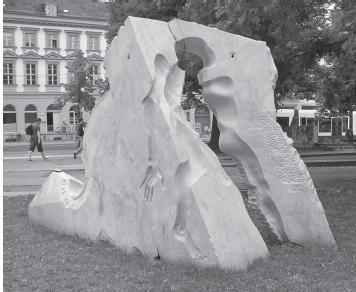
Figure 1.1. Memorial for the Unknown Deserter, by Mehmet Aksoy, Potsdam. Photograph courtesy of Volker Moerbitz, Monterey Institute of International Studies
Fragment 2: On the Importance of Insubordination
Acts of disobedience are of interest to us when they are exemplary, and especially when, as examples, they set off a chain reaction, prompting others to emulate them. Then we are in the presence less of an individual act of cowardice or conscience—perhaps both—than of a social phenomenon that can have massive political effects. Multiplied many thousandfold, such petty acts of refusal may, in the end, make an utter shambles of the plans dreamed up by generals and heads of state. Such petty acts of insubordination typically make no headlines. But just as millions of anthozoan polyps create, willy-nilly, a coral reef, so do thousands upon thousands of acts of insubordination and evasion create an economic or political barrier reef of their own. A double conspiracy of silence shrouds these acts in anonymity. The perpetrators rarely seek to call attention to themselves; their safety lies in their invisibility. The officials, for their part, are reluctant to call attention to rising levels of disobedience; to do so would risk encouraging others and call attention to their fragile moral sway. The result is an oddly complicitous silence that all but expunges such forms of insubordination from the historical record.
And yet, such acts of what I have elsewhere called “everyday forms of resistance” have had enormous, often decisive, effects on the regimes, states, and armies at which they are implicitly directed. The defeat of the Confederate states in America’s great Civil War can almost certainly be attributed to a vast aggregation of acts of desertion and insubordination. In the fall of 1862, little more than a year after the war began, there were widespread crop failures in the South. Soldiers, particularly those from the non-slave-holding backcountry, were getting letters from famished families urging them to return home. Many thousands did, often as whole units, taking their arms with them. Having returned to the hills, most of them actively resisted conscription for the duration of the war.
Later, following the decisive Union victory at Missionary Ridge in the winter of 1863, the writing was on the wall and the Confederate forces experienced a veritable hemorrhage of desertions, again, especially from small-holding, up-country recruits who had no direct interest in the preservation of slavery, especially when it seemed likely to cost them their own lives. Their attitude was summed up in a popular slogan of the time in the Confederacy that the war was “A rich man’s war and a poor man’s fight,” a slogan only reinforced by the fact that rich planters with more than twenty slaves could keep one son at home, presumably to ensure labor discipline. All told, something like a quarter of a million eligible draft-age men deserted or evaded service altogether. To this blow, absorbed by a Confederacy already overmatched in manpower, must be added the substantial numbers of slaves, especially from the border states, who ran to the Union lines, many of whom then enlisted in the Union forces. Last, it seems that the remaining slave population, cheered by Union advances and reluctant to exhaust themselves to increase war production, dragged their feet whenever possible and frequently absconded as well to refuges such as the Great Dismal Swamp, along the Virginia–North Carolina border, where they could not be easily tracked. Thousands upon thousands of acts of desertion, shirking, and absconding, intended to be unobtrusive and to escape detection, amplified the manpower and industrial advantage of the Union forces and may well have been decisive in the Confederacy’s ultimate defeat.
Napoleon’s wars of conquest were ultimately crippled by comparable waves of disobedience. While it is claimed that Napoleon’s invading soldiers brought the French Revolution to the rest of Europe in their knapsacks, it is no exaggeration to assert that the limits of these conquests were sharply etched by the disobedience of the men expected to shoulder those knapsacks. From 1794 to 1796 under the Republic, and then again from 1812 under the Napoleonic empire, the difficulty of scouring the countryside for conscripts was crippling. Families, villages, local officials, and whole cantons conspired to welcome back recruits who had fled and to conceal those who had evaded conscription altogether, some by severing one or more fingers of their right hand. The rates of draft evasion and desertion were something of a referendum on the popularity of the regime and, given their strategic importance of these “voters-with-their-feet” to the needs of Napoleon’s quartermasters, the referendum was conclusive. While the citizens of the First Republic and of Napoleon’s empire may have warmly embraced the promise of universal citizenship, they were less enamored of its logical twin, universal conscription.
Stepping back a moment, it’s worth noticing something particular about these acts: they are virtually all anonymous, they do not shout their name. In fact, their unobtrusiveness contributed to their effectiveness. Desertion is quite different from an open mutiny that directly challenges military commanders. It makes no public claims, it issues no manifestos; it is exit rather than voice. And yet, once the extent of desertion becomes known, it constrains the ambitions of commanders, who know they may not be able to count on their conscripts. During the unpopular U.S. war in Vietnam, the reported “fragging” (throwing of a fragmentation grenade) of those officers who repeatedly exposed their men to deadly patrols was a far more dramatic and violent but nevertheless still anonymous act, meant to lessen the deadly risks of war for conscripts. One can well imagine how reports of fragging, whether true or not, might make officers hesitate to volunteer themselves and their men for dangerous missions. To my knowledge, no study has ever looked into the actual incidence of fragging, let alone the effects it may have had on the conduct and termination of the war. The complicity of silence is, in this case as well, reciprocal.
Quiet, anonymous, and often complicitous, lawbreaking and disobedience may well be the historically preferred mode of political action for peasant and subaltern classes, for whom open defiance is too dangerous. For the two centuries from roughly 1650 to 1850, poaching (of wood, game, fish, kindling, fodder) from Crown or private lands was the most popular crime in England. By “popular” I mean both the most frequent and the most heartily approved of by commoners. Since the rural population had never accepted the claim of the Crown or the nobility to “the free gifts of nature” in forests, streams, and open lands (heath, moor, open pasture), they violated those property rights en masse repeatedly, enough to make the elite claim to property rights in many areas a dead letter. And yet, this vast conflict over property rights was conducted surreptitiously from below with virtually no public declaration of war. It is as if villagers had managed, de facto, defiantly to exercise their presumed right to such lands without ever making a formal claim. It was often remarked that the local complicity was such that gamekeepers could rarely find any villager who would serve as state’s witness.
In the historical struggle over property rights, the antagonists on either side of the barricades have used the weapons that most suited them. Elites, controlling the lawmaking machinery of the state, have deployed bills of enclosure, paper titles, and freehold tenure, not to mention the police, gamekeepers, forest guards, the courts, and the gibbet to establish and defend their property rights. Peasants and subaltern groups, having no access to such heavy weaponry, have instead relied on techniques such as poaching, pilfering, and squatting to contest those claims and assert their own. Unobtrusive and anonymous, like desertion, these “weapons of the weak” stand in sharp contrast to open public challenges that aim at the same objective. Thus, desertion is a lower-risk alternative to mutiny, squatting a lower-risk alternative to a land invasion, poaching a lower-risk alternative to the open assertion of rights to timber, game, or fish. For most of the world’s population today, and most assuredly for subaltern classes historically, such techniques have represented the only quotidian form of politics available. When they have failed, they have given way to more desperate, open conflicts such as riots, rebellions, and insurgency. These bids for power irrupt suddenly onto the official record, leaving traces in the archives beloved of historians and sociologists who, having documents to batten on, assign them a pride of place all out of proportion to the role they would occupy in a more comprehensive account of class struggle. Quiet, unassuming, quotidian insubordination, because it usually flies below the archival radar, waves no banners, has no officeholders, writes no manifestos, and has no permanent organization, escapes notice. And that’s just what the practitioners of these forms of subaltern politics have in mind: to escape notice. You could say that, historically, the goal of peasants and subaltern classes has been to stay out of the archives. When they do make an appearance, you can be pretty sure that something has gone terribly wrong.
If we were to look at the great bandwidth of subaltern politics all the way from small acts of anonymous defiance to massive popular rebellions, we would find that outbreaks of riskier open confrontation are normally preceded by an increase in the tempo of anonymous threats and acts of violence: threatening letters, arson and threats of arson, cattle maiming, sabotage and nighttime machine breaking, and so on. Local elites and officials historically knew these as the likely precursors of open rebellion; and they were intended to be read as such by those who engaged in them. Both the frequency of insubordination and its “threat level” (pace the Office of Homeland Security) were understood by contemporary elites as early warning signs of desperation and political unrest. One of the first op-eds of the young Karl Marx noted in great detail the correlation between, on the one hand, unemployment and declining wages among factory workers in the Rhineland, and on the other, the frequency of prosecution for the theft of firewood from private lands.
The sort of lawbreaking going on here is, I think, a special subspecies of collective action. It is not often recognized as such, in large part because it makes no open claims of this kind and because it is almost always self-serving at the same time. Who is to say whether the poaching hunter is more interested in a warm fire and rabbit stew than in contesting the claim of the aristocracy to the wood and the game he has just taken? It is most certainly not in his interest to help the historian with a public account of his motives. The success of his claim to wood and game lies in keeping his acts and motives shrouded. And yet, the long-run success of this lawbreaking depends on the complicity of his friends and neighbors who may believe in his and their right to forest products and may themselves poach and, in any case, will not bear witness against him or turn him in to the authorities.
One need not have an actual conspiracy to achieve the practical effects of a conspiracy. More regimes have been brought, piecemeal, to their knees by what was once called “Irish democracy,” the silent, dogged resistance, withdrawal, and truculence of millions of ordinary people, than by revolutionary vanguards or rioting mobs.
Fragment 3: More on Insubordination
To see how tacit coordination and lawbreaking can mimic the effects of collective action without its inconveniences and dangers, we might consider the enforcement of speed limits. Let’s imagine that the speed limit for cars is 55 miles per hour. Chances are that the traffic police will not be much inclined to prosecute drivers going 56, 57, 58 … even 60 mph, even though it is technically a violation. This “ceded space of disobedience” is, as it were, seized and becomes occupied territory, and soon much of the traffic is moving along at roughly 60 mph. What about 61, 62, 63 mph? Drivers going just a mile or two above the de facto limit are, they reason, fairly safe. Soon the speeds from, say, 60 to 65mph bid fair to become conquered territory as well. All of the drivers, then, going about 65 mph come absolutely to depend for their relative immunity from prosecution on being surrounded by a veritable capsule of cars traveling at roughly the same speed. There is something like a contagion effect that arises from observation and tacit coordination taking place here, although there is no “Central Committee of Drivers” meeting and plotting massive acts of civil disobedience. At some point, of course, the traffic police do intervene to issue fines and make arrests, and the pattern of their intervention sets terms of calculation that drivers must now consider when deciding how fast to drive. The pressure at the upper end of the tolerated speed, however, is always being tested by drivers in a hurry, and if, for whatever reason, enforcement lapses, the tolerated speed will expand to fill it. As with any analogy, this one must not be pushed too far. Exceeding the speed limit is largely a matter of convenience, not a matter of rights and grievances, and the dangers to speeders from the police are comparatively trivial. (If, on the contrary, we had a 55-mph speed limit and, say, only three traffic police for the whole nation, who summarily executed five or six speeders and strung them up along the interstate highways, the dynamic I have described would screech to a halt!)
I’ve noticed a similar pattern in the way that what begin as “shortcuts” in walking paths often end up becoming paved walkways. Imagine a pattern of daily walking trajectories that, were they confined to paved sidewalks, would oblige people to negotiate the two sides of a right triangle rather than striking out along the (unpaved) hypotenuse. Chances are, a few would venture the shortcut and, if not thwarted, establish a route that others would be tempted to take merely to save time. If the shortcut is heavily trafficked and the groundskeepers relatively tolerant, the shortcut may well, over time, come to be paved. Tacit coordination again. Of course, virtually all of the lanes in older cities that grew from smaller settlements were created in precisely this way; they were the formalization of daily pedestrian and cart tracks, from the well to the market, from the church or school to the artisan quarter—a good example of the principle attributed to Chuang Tzu, “We make the path by walking.”
The movement from practice to custom to rights inscribed in law is an accepted pattern in both common and positive law. In the Anglo-American tradition, it is represented by the law of adverse possession, whereby a pattern of trespass or seizure of property, repeated continuously for a certain number of years, can be used to claim a right, which would then be legally protected. In France, a practice of trespass that could be shown to be of long standing would qualify as a custom and, once proved, would establish a right in law.
Under authoritarian rule it seems patently obvious that subjects who have no elected representatives to champion their cause and who are denied the usual means of public protest (demonstrations, strikes, organized social movement, dissident media) would have no other recourse than foot-dragging, sabotage, poaching, theft, and, ultimately, revolt. Surely the institutions of representative democracy and the freedoms of expression and assembly afforded modern citizens make such forms of dissent obsolete. After all, the core purpose of representative democracy is precisely to allow democratic majorities to realize their claims, however ambitious, in a thoroughly institutionalized fashion.
It is a cruel irony that this great promise of democracy is rarely realized in practice. Most of the great political reforms of the nineteenth and twentieth centuries have been accompanied by massive episodes of civil disobedience, riot, lawbreaking, the disruption of public order, and, at the limit, civil war. Such tumult not only accompanied dramatic political changes but was often absolutely instrumental in bringing them about. Representative institutions and elections by themselves, sadly, seem rarely to bring about major changes in the absence of the force majeure afforded by, say, an economic depression or international war. Owing to the concentration of property and wealth in liberal democracies and the privileged access to media, culture, and political influence these positional advantages afford the richest stratum, it is little wonder that, as Gramsci noted, giving the working class the vote did not translate into radical political change.[7] Ordinary parliamentary politics is noted more for its immobility than for facilitating major reforms.
We are obliged; if this assessment is broadly true, to confront the paradox of the contribution of lawbreaking and disruption to democratic political change. Taking the twentieth-century United States as a case in point, we can identify two major policy reform periods, the Great Depression of the 1930s and the civil rights movement of the 1960s. What is most striking about each, from this perspective, is the vital role massive disruption and threats to public order played in the process of reform.
The great policy shifts represented by the institution of unemployment compensation, massive public works projects, social security aid, and the Agricultural Adjustment Act were, to be sure, abetted by the emergency of the world depression. But the way in which the economic emergency made its political weight felt was not through statistics on income and unemployment but through rampant strikes, looting, rent boycotts, quasi-violent sieges of relief offices, and riots that put what my mother would have called “the fear of God” in business and political elites. They were thoroughly alarmed at what seemed at the time to be potentially revolutionary ferment. The ferment in question was, in the first instance, not institutionalized. That is to say, it was not initially shaped by political parties, trade unions, or recognizable social movements. It represented no coherent policy agenda. Instead it was genuinely unstructured, chaotic, and full of menace to the established order. For this very reason, there was no one to bargain with, no one to credibly offer peace in return for policy changes. The menace was directly proportional to its lack of institutionalization. One could bargain with a trade union or a progressive reform movement, institutions that were geared into the institutional machinery. A strike was one thing, a wildcat strike was another: even the union bosses couldn’t call off a wildcat strike. A demonstration, even a massive one, with leaders was one thing, a rioting mob was another. There were no coherent demands, no one to talk to.
The ultimate source of the massive spontaneous militancy and disruption that threatened public order lay in the radical increase in unemployment and the collapse of wage rates for those lucky enough still to be employed. The normal conditions that sustained routine politics suddenly evaporated. Neither the routines of governance nor the routines of institutionalized opposition and representation made much sense. At the individual level, the deroutinization took the form of vagrancy, crime, and vandalism. Collectively, it took the form of spontaneous defiance in riots, factory occupations, violent strikes, and tumultuous demonstrations. What made the rush of reforms possible were the social forces unleashed by the Depression, which seemed beyond the ability of political elites, property owners, and, it should be noted, trade unions and left-wing parties to master. The hand of the elites was forced.
An astute colleague of mine once observed that liberal democracies in the West were generally run for the benefit of the top, say, 20 percent of the wealth and income distribution. The trick, he added, to keeping this scheme running smoothly has been to convince, especially at election time, the next 30 to 35 percent of the income distribution to fear the poorest half more than they envy the richest 20 percent. The relative success of this scheme can be judged by the persistence of income inequality—and its recent sharpening—over more than a half century. The times when this scheme comes undone are in crisis situations when popular anger overflows its normal channels and threatens the very parameters within which routine politics operates. The brutal fact of routine, institutionalized liberal democratic politics is that the interests of the poor are largely ignored until and unless a sudden and dire crisis catapults the poor into the streets. As Martin Luther King, Jr., noted, “a riot is the language of the unheard.” Large-scale disruption, riot, and spontaneous defiance have always been the most potent political recourse of the poor. Such activity is not without structure. It is structured by informal, self-organized, and transient networks of neighborhood, work, and family that lie outside the formal institutions of politics. This is structure alright, just not the kind amenable to institutionalized politics.
Perhaps the greatest failure of liberal democracies is their historical failure to successfully protect the vital economic and security interests of their less advantaged citizens through their institutions. The fact that democratic progress and renewal appear instead to depend vitally on major episodes of extra-institutional disorder is massively in contradiction to the promise of democracy as the institutionalization of peaceful change. And it is just as surely a failure of democratic political theory that it has not come to grips with the central role of crisis and institutional failure in those major episodes of social and political reform when the political system is relegitimated.
It would be wrong and, in fact, dangerous to claim that such large-scale provocations always or even generally lead to major structural reform. They may instead lead to growing repression, the restriction of civil rights, and, in extreme cases, the overthrow of representative democracy. Nevertheless, it is undeniable that most episodes of major reform have not been initiated without major disorders and the rush of elites to contain and normalize them. One may legitimately prefer the more “decorous” forms of rallies and marches that are committed to nonviolence and seek the moral high ground by appealing to law and democratic rights. Such preferences aside, structural reform has rarely been initiated by decorous and peaceful claims.
The job of trade unions, parties, and even radical social movements is precisely to institutionalize unruly protest and anger. Their function is, one might say, to try to translate anger, frustration, and pain into a coherent political program that can be the basis of policy making and legislation. They are the transmission belt between an unruly public and rule-making elites. The implicit assumption is that if they do their jobs well, not only will they be able to fashion political demands that are, in principle, digestible by legislative institutions, they will, in the process, discipline and regain control of the tumultuous crowds by plausibly representing their interests, or most of them, to the policy makers. Those policy makers negotiate with such “institutions of translation” on the premise that they command the allegiance of and hence can control the constituencies they purport to represent. In this respect, it is no exaggeration to say that organized interests of this kind are parasitic on the spontaneous defiance of those whose interests they presume to represent. It is that defiance that is, at such moments, the source of what influence they have as governing elites strive to contain and channel insurgent masses back into the run of normal politics.
Another paradox: at such moments, organized progressive interests achieve a level of visibility and influence on the basis of defiance that they neither incited nor controlled, and they achieve that influence on the presumption they will then be able to discipline enough of that insurgent mass to reclaim it for politics as usual. If they are successful, of course, the paradox deepens, since as the disruption on which they rose to influence subsides, so does their capacity to affect policy.
The civil rights movement in the 1960s and the speed with which both federal voting registrars were imposed on the segregated South and the Voting Rights Act was passed largely fit the same mold. The widespread voter-registration drives, Freedom Rides, and sit-ins were the product of a great many centers of initiative and imitation. Efforts to coordinate, let alone organize, this bevy of defiance eluded many of the ad hoc bodies established for this purpose, such as the Student Non-Violent Coordinating Committee, let alone the older, mainstream civil rights organizations such as the National Association for the Advancement of Colored People, the Congress on Racial Equality, and the Southern Christian Leadership Conference. The enthusiasm, spontaneity, and creativity of the cascading social movement ran far ahead of the organizations wishing to represent, coordinate, and channel it.
Again, it was the widespread disruption, caused in large part by the violent reaction of segregationist vigilantes and public authorities, that created a crisis of public order throughout much of the South. Legislation that had languished for years was suddenly rushed through Congress as John and Robert Kennedy strove to contain the growing riots and demonstrations, their resolve stiffened by the context of the Cold War propaganda war in which the violence in the south could plausibly be said to characterize a racist state. Massive disorder and violence achieved, in short order, what decades of peaceful organizing and lobbying had failed to attain.
I began this essay with the fairly banal example of crossing against the traffic lights in Neubrandenburg. The purpose was not to urge lawbreaking for its own sake, still less for the petty reason of saving a few minutes. My purpose was rather to illustrate how ingrained habits of automatic obedience could lead to a situation that, on reflection, virtually everyone would agree was absurd. Virtually all the great emancipatory movements of the past three centuries have initially confronted a legal order, not to mention police power, arrayed against them. They would scarcely have prevailed had not a handful of brave souls been willing to breach those laws and customs (e.g., through sit-ins, demonstrations, and mass violations of passed laws). Their disruptive actions, fueled by indignation, frustration, and rage, made it abundantly clear that their claims could not be met within the existing institutional and legal parameters. Thus, immanent in their willingness to break the law was not so much a desire to sow chaos as a compulsion to instate a more just legal order. To the extent that our current rule of law is more capacious and emancipatory than its predecessors were, we owe much of that gain to lawbreakers.
Fragment 4: Advertisement: “Leader looking for followers, willing to follow your lead”
Riots and disruption are not the only way the unheard make their voices felt. There are certain conditions in which elites and leaders are especially attentive to what they have to say, to their likes and dislikes. Consider the case of charisma. It is common to speak of someone possessing charisma in the same way he could be said to have a hundred dollars in his pocket or a BMW in his garage. In fact, of course, charisma is a relationship; it depends absolutely on an audience and on culture. A charismatic performance in Spain or Afghanistan might not be even remotely charismatic in Laos or Tibet. It depends, in other words, on a response, a resonance with those witnessing the performance. And in certain circumstances elites work very hard to elicit that response, to find the right note, to harmonize their message with the wishes and tastes of their listeners and spectators. At rare moments, one can see this at work in real time. Consider the case of Martin Luther King, Jr., for certain audiences perhaps the most charismatic American public political figure of the twentieth century. Thanks to Taylor Branch’s sensitive and detailed biography of King and the movement, we can actually see this searching for the right note at work in real time and in the call-and-response tradition of the African American church. I excerpt, at length, Branch’s account of the speech King gave at the Holt Street YMCA in December 1955, after the conviction of Rosa Parks and on the eve of the Montgomery bus boycott:
“We are here this evening—for serious business,” he said, in even pulses, rising and then falling in pitch. When he paused, only one or two “yes” responses came up from the crowd, and they were quiet ones. It was a throng of shouters he could see, but they were waiting to see where he would take them. [He speaks of Rosa Parks as a fine citizen.]
“And I think I speak with—with legal authority—not that I have any legal authority … that the law has never been totally clarified.” This sentence marked King as a speaker who took care with distinctions, but it took the crowd nowhere. “Nobody can doubt the height of her character, no one can doubt the depth of her Christian commitment.”
“That’s right,” a soft chorus answered.
“And just because she refused to get up, she was arrested,” King repeated. The crowd was stirring now, following King at the speed of a medium walk.
He paused slightly longer.
“And you know, my friends, there comes a time,” he cried, “when people get tired of being trampled over by the iron feet of oppression.”
A flock of “Yeses” was coming back at him when suddenly the individual responses dissolved into a rising cheer and applause exploded beneath that cheer—all within the space of a second. The startling noise rolled on and on, like a wave that refused to break, and just when it seemed that the roar must finally weaken, a wall of sound came in from the enormous crowd outdoors to push the volume still higher. Thunder seemed to be added to the lower register—the sound of feet stomping on the wooden floor—until the loudness became something that was not so much heard as sensed by vibrations in the lungs. The giant cloud of noise shook the building and refused to go away. One sentence had set it loose somehow, pushing the call-and-response of the Negro church past the din of a political rally and on to something else that King had never known before. There was a rabbit of enormous proportions in those bushes. As the noise finally fell back, King’s voice rose above it to fire again. “There comes a time, my friends, when people get tired of being thrown across the abyss of humiliation, when they experience the bleakness of nagging despair,” he declared. “There comes a time when people get tired of getting pushed out of the glittering sunlight of life’s July, and left standing amidst the piercing chill of an Alpine November. There—” King was making a new run, but the crowd drowned him out. No one could tell whether the roar came in response to the nerve he had touched or simply out of pride in the speaker from whose tongue such rhetoric rolled so easily. “We are here—we are here because we are tired now,” King repeated [fig. 1.2].[8][9]
Figure 1.2. Dr. Martin Luther King, Jr., delivering his last sermon, Memphis, Tennessee, April 3, 1968. Photograph from blackpast.org
The pattern Branch so vividly depicts here is repeated in the rest of this particular speech and in most of King’s speeches. Charisma is a kind of perfect pitch. King develops a number of themes and a repertoire of metaphors for expressing them. When he senses a powerful response he repeats the theme in a slightly different way to sustain the enthusiasm and elaborate it. As impressive as his rhetorical creativity is, it is utterly dependent on finding the right pitch that will resonate with the deepest emotions and desires of his listeners. If we take a long view of King as a spokesman for the black Christian community, the civil rights movement, and nonviolent resistance (each a somewhat different audience), we can see how, over time, the seemingly passive listeners to his soaring oratory helped write his speeches for him. They, by their responses, selected the themes that made the vital emotional connection, themes that King would amplify and elaborate in his unique way. The themes that resonated grew; those that elicited little response were dropped from King’s repertoire. Like all charismatic acts, it was in two-part harmony.
The key condition for charisma is listening very carefully and responding. The condition for listening very carefully is a certain dependence on the audience, a certain relationship of power. One of the characteristics of great power is not having to listen. Those at the bottom of the heap are, in general, better listeners than those at the top. The daily quality of the lifeworld of a slave, a serf, a sharecropper, a worker, a domestic depends greatly on an accurate reading of the mood and wishes of the powerful, whereas slave owners, landlords, and bosses can often ignore the wishes of their subordinates. The structural conditions that encourage such attentiveness are therefore the key to this relationship. For King, the attentiveness was built into being asked to lead the Montgomery bus boycott and being dependent on the enthusiastic participation of the black community.
To see how such counterintuitive “speechwriting” works in other contexts, let’s imagine a bard in the medieval marketplace who sings and plays music for a living. Let’s assume also, for purposes of illustration, that the bard in question is a “downmarket” performer—that he plays in the poor quarters of the town and is dependent on a copper or two from many of his listeners for his daily bread. Finally, let’s further imagine that the bard has a repertoire of a thousand songs and is new to the town.
My guess is that the bard will begin with a random selection of songs or perhaps the ones that were favored in the previous towns he visited. Day after day he observes the response of his listeners and the number of coppers in his hat at the end of the day. Perhaps they make requests. Over time, surely, the bard, providing only that he is self-interestedly attentive, will narrow his performance to the tunes and themes favored by his audience—certain songs will drop out of his active repertoire and others will be performed repeatedly. The audience will have, again over time, shaped his repertoire in accordance with their tastes and desires in much the way that King’s audience, again over time, shaped his speeches. This rather skeletal story doesn’t allow for the creativity of the bard or orator constantly trying out new themes and developing them or for the evolving tastes of the audience, but it does illustrate the essential reciprocity of charismatic leadership.
The illustrative “bard” story is not far removed from the actual experience of a Chinese student sent to the countryside during the Cultural Revolution. Being of slight build and having no obvious skills useful to villagers, he was at first deeply resented as another mouth to feed while contributing nothing to production. Short of food themselves, the villagers gave him little or nothing to eat, and he was gradually wasting away. He discovered, however, that the villagers liked to hear his late evening recitations of traditional folktales, of which he knew hundreds. To keep him reciting in the evening, they would feed him small snacks to supplement his starvation rations. His stories literally kept him alive. What’s more, his repertoire, as with our mythical bard, came over time to accord with the tastes of his peasant audience. Some of his tales left them cold, and him unfed. Some tales they loved and wanted to have told again and again. He literally sang for his supper, but the villagers, as it were, called the tune. When private trade and markets were later allowed, he told tales in the district marketplace to a larger and different audience. Here, too, his repertoire accommodated itself to his new audience.[10]
Politicians, anxious for votes in tumultuous times when tried-and-true themes seem to carry little resonance, tend, like a bard or Martin Luther King, Jr., to keep their ears firmly to the ground to assess what moves the constituents whose support and enthusiasm they need. Franklin Delano Roosevelt’s first campaign for the U.S. presidency, at the beginning of the Great Depression, is a striking case in point. At the outset of the campaign, Roosevelt was a rather conservative Democrat not inclined to make promises or claims that were radical. In the course of the campaign, however, which was mostly conducted at whistle-stops, owing to the candidate’s paralysis, the Roosevelt standard speech evolved, becoming more radical and expansive. Roosevelt and his speechwriters worked feverishly, trying new themes, new phrasings, and new claims at whistle-stop after whistle-stop, adjusting the speech little by little, depending on the response and the particular audience. In an era of unprecedented poverty and unemployment, FDR confronted an audience that looked to him for hope and the promise of assistance, and gradually his stump speech came to embody those hopes. At the end of the campaign, his oral “platform” was far more radical than it had been at the outset. There was a real sense in which, cumulatively, the audience at the whistle-stops had written (or shall we say “selected”) his speech for him. It wasn’t just the speech that was transformed but Roosevelt himself, who now saw himself embodying the aspirations of millions of his desperate countrymen.
This particular form of influence from below works only in certain conditions. If the bard is hired away by the local lord to sing him praise songs in return for room and board, the repertoire would look very different. If a politician lives or dies largely by huge donations designed as much to shape public opinion as to accommodate it, he or she will pay less attention to rank-and-file supporters. A social or revolutionary movement not yet in power is likely to have better hearing than one that has come to power. The most powerful don’t have to learn how to carry a tune. Or, as Kenneth Boulding put it, “the larger and more authoritarian an organization [or state], the better the chance that its top decision-makers will be operating in purely imaginative worlds.”[11]
Two: Vernacular Order, Official Order
Fragment 5: Vernacular and Official Ways of “Knowing”
I live in small inland town in Connecticut called Durham, after its much larger and better-known English namesake. Whether out of nostalgia for the landscape left behind or a lack of imagination, there is scarcely a town in Connecticut that does not simply appropriate an English place-name. Native American landscape terms tend to survive only in the names of lakes and rivers, or in the name of the state itself. It is a rare colonial enterprise that does not attempt to rename the landscape as a means of asserting its ownership and making it both familiar and legible to the colonizers. In settings as disparate as Ireland, Australia, and the Palestinian West Bank, the landscape has been comprehensively renamed in an effort to smother the older vernacular terms.
Consider, by way of illustration, the vernacular and official names for roads. A road runs between my town of Durham and the coastal town of Guilford, some sixteen miles to the south. Those of us who live in Durham call this road (among ourselves) the “Guilford Road” because it tells us exactly where we’ll get to if we take it. The same road at its Guilford terminus is naturally called the “Durham Road” because it tells the inhabitants of Guilford exactly where they’ll get to if they take it. One imagines that those who live midway along the road call it the “Durham Road” or the “Guilford Road” depending on which way they are heading. That the same road has two names depending on one’s location demonstrates the situational, contingent nature of vernacular naming practices; each name encodes valuable local knowledge—perhaps the most important single thing you would want to know about a road is where it leads. Vernacular practices not only produce one road with two names but many roads with the same name. Thus, the nearby towns of Killingworth, Haddam, Madison, and Meriden each have roads leading to Durham that the local inhabitants call the “Durham Road.”
Now imagine the insuperable problems that this locally effective folk system would pose to an outsider requiring a unique and definitive name for each road. A state road repair crew sent to fix potholes on the “Durham Road” would have to ask, “Which Durham Road?” Thus it comes as no surprise that the road between Durham and Guilford is reincarnated on all state maps and in all official designations as “Route 77.” The naming practices of the state require a synoptic view, a standardized scheme of identification generating mutually exclusive and exhaustive designations. As Route 77, the road no longer immediately conveys where it leads; the sense of Route 77 only springs into view once we spread out a road map on which all state roads are enumerated. And yet the official name can be of vital importance. If you are gravely injured in a car crash on the Durham-Guilford Road, you will want to tell the state-dispatched ambulance team unambiguously that the road on which you are in danger of bleeding to death is Route 77.
Vernacular and official naming schemes jostle one another in many contexts. Vernacular names for streets and roads encode local knowledge. Some examples are Maiden Lane (the Lane where five spinster sisters once lived and walked, single file, to church every Sunday), Cider Hill Road (the road up the hill where the orchard and cider mill once stood), and Cream Pot Road (once the site of a dairy, where neighbors bought milk, cream, and butter). At the time when the name became fixed, it was probably the most relevant and useful name for local residents, though it might be mystifying to outsiders and recent arrivals. Other road names might refer to geographic features: Mica Ridge Road, Bare Rock Road, Ball Brook Road. The sum of roads and place-names in a small place, in fact, amounts to something of a local geography and history if one is familiar with the stories, features, episodes, and family enterprises encoded within them. For local people these names are rich and meaningful; for outsiders they are frequently illegible. The nonlocal planners, tax collectors, transportation managers, ambulance dispatchers, police officers, and firefighters, however, find a higher order of synoptic legibility far preferable. Given their way, they tend to prefer grids of parallel streets, consecutively numbered (First Street, Second Street), and compass directions (Northwest First Street, Northeast Second Avenue). Washington, D.C., is a particularly stunning example of such rational planning. New York City, by contrast, is a hybrid. Below Wall Street (marking the outer wall of the original Dutch settlement), the city is “vernacular” in its tangle of street forms and names, many of them originally footpaths; above Wall Street it is an easily legible, synoptic grid city of Cartesian simplicity, with avenues and streets at right angles to one another and enumerated, with a few exceptions, consecutively. Some midwestern towns, to relieve the monotony of numbered streets, have instead named them consecutively after presidents. As a bid for legibility, it is likely to appeal only to quiz show fans, who know when to expect “Polk,” “Van Buren,” “Taylor,” and “Cleveland” streets to pop up; as a pedagogical tool, there is something to be said for it.
Vernacular measurement is only as precise as it needs to be for the purposes at hand. It is symbolized in such expressions as a “pinch of salt,” “a stone’s throw,” “a book of hay,” “within shouting distance.” And for many purposes, vernacular rules may prove more accurate than apparently more exact systems. A case in point is the advice given by Squanto to white settlers in New England about when to plant a crop new to them, maize. He reportedly told them to “plant corn when the oak leaves were the size of a squirrel’s ear.” An eighteenth-century farmer’s almanac, by contrast, would typically advise planting, say, “after the first full moon in May,” or else would specify a particular date. One imagines that the almanac publisher would have feared, above all, a killing frost, and would have erred on the side of caution. Still, the almanac advice is, in its way, rigid: What about farms near the coast as opposed to those inland? What about fields on the north side of a hill that got less sun, or farms at higher elevations? The almanac’s one-size-fits-all prescription travels rather badly. Squanto’s formula, on the other hand, travels well. Wherever there are squirrels and oak trees and they are observed locally, it works. The vernacular observation, it turns out, is closely correlated with ground temperature, which governs oak leafing. It is based on a close observation of the sequence of spring events that are always sequential but may be early or delayed, drawn out or rushed, whereas the almanac relies on a universal calendrical and lunar system.
Fragment 6: Official Knowledge and Landscapes of Control
The order, rationality, abstractness, and synoptic legibility of certain kinds of schemes of naming, landscape, architecture, and work processes lend themselves to hierarchical power. I think of them as “landscapes of control and appropriation.” To take a simple example, the nearly universal system of permanent patronymic naming did not exist anywhere in the world before states found it useful for identification. It has spread along with taxes, courts, landed property, conscription, and police work—that is, along with the development of the state. It has now been superseded by identification numbers, photography, fingerprints, and DNA testing, but it was invented as a means of supervision and control. The resulting techniques represent a general capacitythat can be used as easily to deliver vaccinations as to round up enemies of the regime. They centralize knowledge and power, but they are utterly neutral with respect to the purposes to which they are put.
The industrial assembly line is, from this perspective, the replacement of vernacular, artisanal production by a division of labor in which only the designing engineer controls the whole labor process and the workers on the floor become substitutable “hands.” It may, for some products, be more efficient than artisanal production, but there is no doubt that it always concentrates power over the work process in those who control the assembly line. The utopian management dream of perfect mechanical control was, however, unrealizable not just because trade unions intervened but also because each machine had its own particularities, and a worker who had a vernacular, local knowledge of this particular milling or stamping machine was valuable for that reason. Even on the line, vernacular knowledge was essential to successful production.
Where the uniformity of the product is of great concern and where much of the work can be undertaken in a setting specifically constructed for that purpose, as in the building of Henry Ford’s Model T or, for that matter, the construction of a Big Mac at a McDonald’s, the degree of control can be impressive. The layout, down to the minutest detail at a Mc-Donald’s franchise, is calculated to maximize control over the materials and the work process from the center. That is, the district supervisor who arrives for an inspection with his handy clipboard can evaluate the franchise according to a protocol that has been engineered into the design itself. The coolers are uniform and their location is prescribed. The same goes for the deep fryers, the grills, the protocol for their cleaning and maintenance, the paper wrappers, etc., etc. The platonic form of the perfect McDonald’s franchise and the perfect Big Mac has been dreamed up at central headquarters and engineered into the architecture, layout, and training so that the clipboard scoring can be used to judge how close it has come to the ideal. In its immanent logic, Fordist production and the McDonald’s module is, as E. F. Schumacher noted in 1973, “an offensive against the unpredictability, unpunctuality, general waywardness and cussedness of living nature, including man.”[12]
It is no exaggeration, I think, to view the past three centuries as the triumph of standardized, official landscapes of control and appropriation over vernacular order. That this triumph has come in tandem with the rise of large-scale hierarchical organizations, of which the state itself is only the most striking example, is entirely logical. The list of lost vernacular orders is potentially staggering. I venture here only the beginning of such a list and invite readers, if they have the appetite, to supplement it. National standard languages have replaced local tongues. Commoditized freehold land tenure has replaced complex local land-use practices, planned communities and neighborhoods have replaced older, unplanned communities and neighborhoods, and large factories and farms have replaced artisanal production and smallholder, mixed farming. Standard naming and identification practices have replaced innumerable local naming customs. National law has replaced local common law and tradition. Large schemes of irrigation and electricity supply have replaced locally adapted irrigation systems and fuel gathering. Landscapes relatively resistant to control and appropriation have been replaced with landscapes that facilitate hierarchical coordination.
Fragment 7: The Resilience of the Vernacular
It is perfectly clear that large-scale modernist schemes of imperative coordination can, for certain purposes, be the most efficient, equitable, and satisfactory solution. Space exploration, the planning of vast transportation networks, airplane manufacture, and other necessarily large-scale endeavors may well require huge organizations minutely coordinated by a few experts. The control of epidemics or of pollution requires a center staffed by experts receiving and digesting standard information from hundreds of reporting units.
Where such schemes run into trouble, sometimes catastrophic trouble, is when they encounter a recalcitrant nature, the complexity of which they only poorly comprehend, or when they encounter a recalcitrant human nature, the complexity of which they also poorly comprehend.
The troubles that have plagued “scientific” forestry, invented in the German lands in the late eighteenth century, and some forms of plantation agriculture typify the encounter. Wanting to maximize revenue from the sale of firewood and lumber from domain forests, the originators of scientific forestry reasoned that, depending on the soil, either the Norway spruce or the Scotch pine would provide the maximum cubic meters of timber per hectare. To this end, they clear-cut mixed forests and planted a single species simultaneously and in straight rows (as with row crops). They aimed at a forest that was easy to inspect, could be felled at a given time, and would produce a uniform log from a standardized tree (the Normalbaum). For a while—nearly an entire century—it worked brilliantly. Then it faltered. It turned out that the first rotation had apparently profited from the accumulated soil capital of the mixed forest it had replaced without replenishment. The single-species forest was above all a veritable feast for the pests, rusts, scales, and blights that specialized in attacking the Scotch pine or the Norway spruce. A forest of trees all the same age was also far more susceptible to catastrophic storm and wind damage. In an effort to simplify the forest as a one-commodity machine, scientific forestry had radically reduced its diversity. The lack of tree species diversity was replicated at every level in this stripped-down forest: in the poverty of insect species, of birds, of mammals, of lichen, of mosses, of fungi, of flora in general. The planners had created a green desert, and nature had struck back. In little more than a century, the successors of those who had made scientific forestry famous in turn made the terms “forest death” (Waldsterben) and “restoration forestry” equally famous (fig. 2.1).

Figure 2.1. Scientific forest, Lithuania. Photograph © Alfas Pliura
Henry Ford, bolstered by the success of the Model T and wealth beyond imagining, ran into much the same problem when he tried translating his success in building cars in factories to growing rubber trees in the tropics. He bought a tract of land roughly the size of Connecticut along a branch of the Amazon and set about creating Fordlandia. If successful, his plantation would have supplied enough latex to equip all his autos with tires for the foreseeable future. It proved an unmitigated disaster. In their natural habitat in the Amazon basin, rubber trees grow here and there among mixed stands of great diversity. They thrive amid this variety in part because they are far enough apart to minimize the buildup of diseases and pests that favor them in this, their native habitat. Transplanted to Southeast Asia by the Dutch and the British, rubber trees did relatively well in plantation stands precisely because they did not bring with them the full complement of pests and enemies. But concentrated as row crops in the Amazon, they succumbed in a few years to a variety of diseases and blights that even heroic and expensive efforts at triple grafting (one canopy stock grafted to another trunk stock, and both grafted to a different root stock) could not overcome.
In the contrived and man-made auto-assembly plant in River Rouge, built for a single purpose, the environment could, with difficulty, be mastered. In the Brazilian tropics, it could not. After millions had been invested, after innumerable changes in management and reformulated plans, after riots by the workforce, Henry Ford’s adventure in Brazil was abandoned.
Henry Ford started with what his experts judged to be the best rubber tree and then tried to reshape the environment to suit it. Compare this logic to its mirror image: starting with the environmental givens and then selecting the cultivars that best fit a given niche. Customary practices of potato cultivation in the Andes represent a fine example of vernacular, artisanal farming. A high-altitude Andean potato farmer might cultivate as many as fifteen small parcels, some on a rotating basis. Each parcel is distinct in terms of its soil, altitude, orientation to sun and wind, moisture, slope, and history of cultivation. There is no “standard field.” Choosing from among a large number of locally developed landraces, each with different and well-known characteristics, the farmer makes a series of prudent bets, planting anywhere from one cultivar to as many as a dozen in a single field. Each season is the occasion for a new round of trials, with last season’s results in terms of yield, disease, prices, and response to changed plot conditions carefully weighed. These farms are market-oriented experiment stations with good yields, great adaptability, and reliability. At least as important, they are not merely producing crops; they are reproducing farmers and communities with plant-breeding skills, flexible strategies, ecological knowledge, and considerable self-confidence and autonomy.
The logic of scientific extension agriculture in the Andes is analogous to Henry Ford’s Amazonian plantations. It begins with the idea of an “ideal” potato, defined largely but not entirely in terms of yield. Plant scientists then set about breeding a genotype that will most closely approximate the desired characteristics. That genotype is grown in experimental plots to determine the conditions that best allow it to flourish. The main purpose of extension work, then, to retrofit the entire environment of the farmer’s field so as to realize the potential of the new genotype. This may require the application of nitrogen fertilizer, herbicides, and pesticides, special field and soil preparation, irrigation, and the timing of cultivation (planting, watering, weeding, harvesting). As one might expect, each new “ideal” cultivar usually fails within three or four years as pests and diseases gain on it, to be replaced in turn with a newer ideal potato and the cycle begins again. To the degree that it succeeds, it turns the fields into standard fields and the farmers into standard farmers, just as Henry Ford standardized the work environment and workers in River Rouge. The assembly line and the monoculture plantation each require, as a condition of their existence, the subjugation of both the vernacular artisan and of the diverse, vernacular landscape.
Fragment 8: The Attractions of the Disorderly City
It turns out that it is not only plants that seem to thrive best in settings of diversity. Human nature as well seems to shun a narrow uniformity in favor of variety and diversity.
The high tide of modernist urban planning spans the first half of the twentieth century, when the triumph of civil engineering, a revolution in building techniques and materials, and the political ambitions to remake urban life combined to transform cities throughout the West. In its ambitions, it bears more than a family resemblance to scientific forestry and plantation agriculture. The emphasis was on visual order and the segregation of function. Visually, a theme to which I shall return, utopian planners favored “the sublime straight line,” right angles, and sculptural regularity. When it came to spatial layout, virtually all planners favored the strict separation of diffferent spheres of urban activity: residential housing, commercial retail space, office space, entertainment, government offices, and ceremonial space. One can easily see why this was convenient for the planners. So many retail outlets serving so many customers could be reduced to something of an algorithm requiring so many square feet per store, so many square feet of shelf space, planned transportation links, and so forth; residences required so many square feet of living space per (standardized) family, so much sunlight, so much water, so much kitchen space, so many electric outlets, so much adjacent playground space. Strict segregation of functions minimized the variables in the algorithm: it was easier to plan, easier to build, easier to maintain, easier to police, and, they thought, easier on the eye. Planning for single uses facilitated standardization, while by comparison, planning a complex, mixed-use town in these terms would have been a nightmare.
There was one problem. People tended to hate such cities and shunned them when they could. When they couldn’t, they found other ways to express their despair and contempt. It is said that the postmodern era began at precisely 3 p.m. on March 16, 1972, when the award-winning Pruitt-Igoe high-rise public housing project in St. Louis was finally and officially dynamited to a heap of rubble. Its inhabitants had, in effect, reduced it to a shell. The Pruitt-Igoe buildings were merely the flagship for an entire fleet of isolated, single-use, high-rise public housing apartment blocks that seemed degrading warehouses to most of their residents and that have now largely been demolished.
At the same time that these housing projects, sailing under the banner of “slum clearance” and the elimination of “urban blight,” were being constructed, they were subjected to a comprehensive and ultimately successful critique by urbanists like Jane Jacobs, who were more interested in the vernacular city: in daily urban life, and in how the city actually functioned more than in how it looked. Urban planning, like most official schemes, was characterized by a self-conscious tunnel vision. That is, it focused relentlessly on a single objective and design with a view to maximizing that objective. If the objective was growing corn, the goal became growing the most bushels per acre; if it was Model Ts, it was producing the most Model Ts for the labor and input costs; if it was health care delivery, a hospital was designed solely for efficiency in treatment; if it was the production of lumber, the forest was redesigned to be a one-commodity machine.
Jacobs understood three things that these modernist planners were utterly blind to. First, she identified the fatal assumption that in any such activity there is only one thing going on, and the objective of planning is to maximize the efficiency of its delivery. Unlike the planners whose algorithms depended on stipulated efficiencies—how long it took to get to work from home, how efficiently food could be delivered to the city—she understood there were a great many human purposes embedded in any human activity. Mothers or fathers pushing baby carriages may simultaneously be talking to friends, doing errands, getting a bite to eat, and looking for a book. An office worker may find lunch or a beer with co-workers the most satisfying part of the day. Second, Jacobs grasped that it was for this reason, as well as for the sheer pleasure of navigating in an animated, stimulating, and varied environment, that complex, mixed-use districts of the city were often the most desirable locations. Successful urban neighborhoods—ones that were safe, pleasant, amenity-rich, and economically viable—tended to be dense, mixed-use areas, with virtually all the urban functions concentrated and mixed higgledy-piggledy. Moreover, they were also dynamic over time. The effort to specify and freeze functions by planning fiat Jacobs termed “social taxidermy.”
Finally, she explained that if one started from the “lived,” vernacular city, it became clear that the effort by urban planners to turn cities into disciplined works of art of geometric, visual order was not just fundamentally misguided, it was an attack on the actual, functioning vernacular order of a successful urban neighborhood.
Looked at from this angle, the standard practice of urban planning and architecture suddenly seems very bizarre indeed. The architect and planners proceed by devising an overall vision of the building or ensemble of buildings they propose. This vision is physically represented in drawings and, typically, in an actual model of the buildings proposed. One sees in the newspapers photographs of beaming city officials and architects looking down on the successful model as if they were in helicopters, or gods. What is astounding, from a vernacular perspective, is that no one ever experiences the city from that height or angle. The presumptive ground-level experience of real pedestrians—window-shoppers, errand-runners, aimlessly strolling lovers—is left entirely out of the urban-planning equation. It is substantially as sculptural miniatures that the plans are seen, and it is hardly surprising that they should be appreciated for their visual appeal as attractive works of art: works of art that will henceforth never be seen again from that godlike vantage point, except by Superman.
This logic of modeling and miniaturization as a characteristic of official forms of order is, I think, diagnostic. The real world is messy and even dangerous. Mankind has a long history of miniaturization as a form of play, control, and manipulation. It can be seen in toy soldiers, model tanks, trucks, cars, warships and planes, dollhouses, model railroads, and so on. Such toys serve the entirely admirable purpose of letting us play with representations when the real thing is inaccessible or dangerous, or both. But miniaturization is very much a game for grown-ups, presidents, and generals as well. When the effort to transform a recalcitrant and intractable world is frustrated, elites are often tempted to retreat to miniatures, some of them quite grandiose. The effect of this retreat is to create small, relatively self-contained utopian spaces where the desired perfection might be more nearly realized. Model villages, model cities, military colonies, show projects, and demonstration farms offer politicians, administrators, and specialists a chance to create a sharply defined experimental terrain where the number of rogue variables and unknowns is minimized. The limiting case, where control is maximized but impact on the external world is minimized, is the museum or theme park. Model farms and model towns have, of course, a legitimate role as experiments where ideas about production, design, and social organization can be tested at low risk and scaled up or abandoned, depending on how they fare. Just as often, however, as with many “designer” national capitals (e.g., Washington, D.C., St. Petersburg, Dodoma, Brasilia, Islamabad, New Delhi, Abuja), they become stand-alone architectural and political statements at odds, and often purposely so, with their larger environment. The insistence on a rigid visual aesthetic at the core of the capital city tends to produce a penumbra of settlements and slums teeming with squatters, people who, as often as not, sweep the floors, cook the meals, and tend the children of the elites who work at the decorous, planned center. Order at the center is in this sense deceptive, being sustained by nonconforming and unacknowledged practices at the periphery.
Fragment 9: The Chaos behind Neatness
Governing a large state is like cooking a small fish.
Tao Te Ching
The more highly planned, regulated, and formal a social or economic order is, the more likely it is to be parasitic on informal processes that the formal scheme does not recognize and without which it could not continue to exist, informal processes that the formal order cannot alone create and maintain. Here language acquisition is an instructive metaphor. Children do not begin by learning the rules of grammar and then using these rules to construct a successful sentence. They learn to speak the way they learn to walk: by imitation, trial, error, and endless practice. The rules of grammar are the regularities that can be observed in successful speaking, they are not the cause of successful speech.
Workers have seized on the inadequacy of the rules to explain how things actually run and have exploited it to their advantage. Thus, the taxi drivers of Paris have, when they were frustrated with the municipal authorities over fees or new regulations, resorted to what is known as a grève de zèle. They would all, by agreement and on cue, suddenly begin to follow all the regulations in the code routier, and, as intended, this would bring traffic in Paris to a grinding halt. Knowing that traffic circulated in Paris only by a practiced and judicious disregard of many regulations, they could, merely by following the rules meticulously, bring it to a standstill. The English-language version of this procedure is often known as the “work-to-rule” strike. In an extended work-to-rule action against the Caterpillar Corporation, workers reverted to following the inefficient procedures specified by engineers, knowing that it would cost the company valuable time and quality, rather than continuing the more expeditious practices they had long ago devised on the job. The actual work process in any office, on any construction site, or on any factory floor cannot be adequately explained by the rules, however elaborate, governing it; the work gets done only because of the effective informal understandings and improvisations outside those rules.
The planned economies of the socialist bloc before the breach in the Berlin Wall in 1989 were a striking example of how rigid production norms were sustained only by informal arrangements wholly outside the official scheme. In one typical East German factory, the two most indispensable employees were not even part of the official organizational chart. One was a “jack-of-all trades” adept at devising short-term, jury-rigged solutions to keep machines running, to correct production flaws, and to make substitute spare parts. The second indispensable employee used factory funds to purchase and store desirable nonperishable goods (e.g., soap powder, quality paper, good wine, yarn, medicines, fashionable clothes) when they were available. Then, when the factory absolutely needed a machine, spare parts, or raw material not available through the plan to meet its quotas and earn its bonuses, this employee packed the hoarded goods in a Trabant and went seeking to barter them for the necessary factory supplies. Were it not for these informal arrangements, formal production would have ceased.
Like the city official peering down at the architect’s proposed model of a new development site, we are all prone to the error of equating visual order with working order and visual complexity with disorder. It is a natural and, I believe, grave mistake, and one strongly associated with modernism. How dubious such an association is requires but a moment’s reflection. Does it follow that more learning is taking place in a classroom with uniformed students seated at desks arranged in neat rows than in a classroom with un-uniformed students sitting on the floor or around a table? The great critic of modern urban planning, Jane Jacobs, warned that the intricate complexity of a successful mixed-use neighborhood was not, as the aesthetic of many urban planners supposed, a representation of chaos and disorder. It was, though unplanned, a highly elaborated and resilient form of order. The apparent disorder of leaves falling in the autumn, of the entrails of a rabbit, of the interior of a jet engine, of the city desk of a major newspaper is not disorder at all but rather an intricate functional order. Once its logic and purpose are grasped, it actually looks different and reflects the order of its function.
Take the design of field crops and gardens. The tendency of modern “scientific” agriculture has favored large, capital-intensive fields, with a single crop, often a hybrid or clone for maximum uniformity, grown in straight rows for easy tillage and machine harvesting. The use of fertilizers, irrigation, pesticides, and herbicides serves to make the field conditions as suitable to the single cultivar and as uniform as possible. It is a generic module of farming that travels well and actually works tolerably well for what I think of as “proletarian” production crops such as wheat, corn, cotton, and soybeans that tolerate rough handling. The effort of this agriculture to rise above, as it were, local soils, local landscape, local labor, local implements, and local weather makes it the very antithesis of vernacular agriculture. The Western vegetable garden has some, not all, of the same features. Though it contains many cultivars they are typically planted in straight rows, one cultivar to a row, and look rather like a military regiment drawn up for inspection at a parade. The geometric order is often a matter of pride. Again, there is a striking emphasis on visual regularity from above and outside.
Contrast this with, say, the indigenous field crops of tropical West Africa as encountered by British agricultural extension agents in the nineteenth century. They were shocked. Visually, the fields seemed a mess: there were two, three, and sometimes four crops crowded into the field at a time, other crops were planted in relays, small bunds—embankments—of sticks were scattered here and there, small hillocks appeared to be scattered at random. Since to a Western eye the fields were obviously a mess; the assumption was that the cultivators were themselves negligent and careless. The extension agents set about teaching them proper, “modern” agricultural techniques. It was only after roughly thirty years of frustration and failure that a Westerner thought to actually examine, scientifically, the relative merits of the two forms of cultivation under West African conditions. It turned out that the “mess” in the West African field was an agricultural system finely tuned to local conditions. The polycropping and relay cropping ensured there was ground cover to prevent erosion and capture rainfall year-round; one crop provided nutrients to another or shaded it; the bunds prevented gully erosion; cultivars were scattered to minimize pest damage and disease.
Not only were the methods sustainable, the yields compared favorably with the yields of crops grown by the Western techniques preferred by the extension agents. What the extension agents had done was erroneously to associate visual order with working order and visual disorder with inefficiency. The Westerners were in the grip of a quasi-religious faith in crop geometry, while the West Africans had worked out a highly successful system of cultivation without regard to geometry.
Edgar Anderson, a botanist interested in the history of maize in Central America, stumbled across a peasant garden in Guatemala that demonstrated how apparent visual disorder could be the key to a finely tuned working order. Walking by it on his way to the fields of maize each day, he at first took it to be an overgrown, vegetable dump heap. Only when he saw someone working in it did he realize that it was not just a garden but a brilliantly conceived garden despite, or rather because of, its visual disorder from a Western gardening perspective. I cannot do better than to quote him at length about the logic behind the garden and reproduce his diagrams of its layout (fig. 2.2).

Figure 2.2. Edgar Anderson’s drawings for the Vernacular Garden, Guatemala. (a) Above An orchard garden. (b) Right Detailed glyphs identifying the plants and their categories in the garden. Reprinted from Plants, Man, and Life, by Edgar Anderson, published by the University of California Press; reprinted with permission of the University of California Press
Though at first sight there seems little order; as soon as we started mapping the garden, we realized that it was planted in fairly definite cross-wise rows. There were fruit trees, native and European in great variety: annonas, cheromoyas, avocados, peaches, quinces, plums, a fig, and a few coffee bushes. There were giant cacti grown for their fruit. There was a large plant of rosemary, a plant of rue, some poinsettias, and a semi-climbing tea rose. There was a whole row of the native domesticated hawthorn, whose fruit like yellow, doll-sized apples make a delicious conserve. There were two varieties of corn, one well past bearing and now serving as a trellis for climbing string beans which were just coming into season, the other, a much taller sort, which was tasseling out. There were specimens of a little banana with smooth wide leaves which are the local substitute for wrapping paper, and are also used instead of cornhusks in cooking the native variant of hot tamales. Over it all clambered the luxuriant vines of various cucurbits. Chayote, when finally mature has a nutritious root weighing several pounds. At one point there was a depression the size of a small bathtub where a chayote root had recently been excavated; this served as a dump heap and compost for waste from the house. At one end of the garden was a small beehive made from boxes and tin cans. In terms of our American and European equivalents, the garden was a vegetable garden, an orchard, a medicinal garden, a dump heap, a compost heap, and a beeyard. There was no problem of erosion though it was at the top of a steep slope; the soil surface was practically all covered and apparently would be during most of the year. Humidity would be kept during the dry season and plants of the same sort were so isolated from one another by intervening vegetation that pests and diseases could not readily spread from plant to plant. The fertility was being conserved; in addition to the waste from the house, mature plants were being buried in between the rows when their usefulness was over.
It is frequently said by Europeans and European Americans that time means nothing to an Indian. This garden seemed to me to be a good example of how the Indian, when we look more than superficially into his activities, is budgeting time more efficiently than we do. The garden was in continuous production but was taking only a little effort at any one time: a few weeds pulled when one came down to pick the squashes, corn and bean plants dug in between the rows when the last of the climbing beans was picked, and a new crop of something else planted above them a few weeks later.[13]
Fragment 10: The Anarchist’s Sworn Enemy
Over the past two centuries, vernacular practices have been extinguished at such a rate that one can, with little exaggeration, think of the process as one of mass extinction akin to the accelerated disappearance of species. And the cause is also analogous: the loss of habitat. Many vernacular practices have made their final exit, and others are endangered.
The principal agent behind their extinction is none other than the anarchists’ sworn enemy, the state, and in particular the modern nation-state. The rise of the modern and now hegemonic political module of the nation-state displaced and then crushed a host of vernacular political forms: stateless bands, tribes, free cities, loose confederations of towns, maroon communities, empires. In their place stands everywhere a single vernacular: the North Atlantic nation-state, codified in the eighteenth century and masquerading as a universal. It is, if we run back several hundred yards and open our eyes in wonder, nothing short of amazing that one can travel anywhere in the world and encounter virtually the same institutional order: a national flag, a national anthem, national theaters, national orchestras, heads of state, a parliament (real or fictitious), a central bank, a league table of similar ministries similarly organized, a security apparatus, and so on. Colonial empires and “modernist” emulation played a role in propagating the module, but its staying power depends on the fact that such institutions are the universal gears that integrate a political unit into the established international systems. Until 1989 there were two poles of emulation. In the socialist bloc one could go from Czechoslovakia to Mozambique, to Cuba, to Vietnam, to Laos, to Mongolia and find roughly the same central planning apparatus, collective farms, and five-year plans. Since then, with few exceptions, a single standard has prevailed.
Once in place, the modern (nation-) state set about homogenizing its population and the people’s deviant, vernacular practices. Nearly everywhere, the state proceeded to fabricate a nation: France set about creating Frenchmen, Italy set about creating Italians.
This entailed a great project of homogenization. A huge variety of languages and dialects, often mutually unintelligible, were, largely through schooling, subordinated to a standardized national language—often the dialect of the dominant region. This led to the disappearance of languages; of local literatures, oral and written; of music; of legends and epics; of whole worlds of meaning. A huge variety of local laws and customary practices were replaced by a national system of law that was, in principle at least, everywhere the same. A huge variety of land-use practices were replaced by a national system of land titling, registration, and transfer, the better to facilitate taxation. A huge number of local pedagogies—apprenticeships, tutoring by traveling “masters,” healing, religious instruction, informal classes—were typically replaced by a national school system in which a French minister of education could boast that, as it was 10:20 a.m., he knew exactly which passage of Cicero all students of a certain form throughout France would be studying. This utopian image of uniformity was seldom achieved, but what these projects did accomplish was the destruction of vernaculars.
Beyond the nation-state itself, the forces of standardization are today represented by international organizations. It is the principal aim of institutions such as the World Bank, the International Monetary Fund, the World Trade Organization, UNESCO, and even UNICEF and the World Court to propagate normative (“best practice”) standards, once again deriving from the North Atlantic nations, throughout the globe. The financial muscle of these agencies is such that failure to conform to their recommendations carries substantial penalties in loans and aid forgone. The process of institutional alignment now goes by the charming euphemism of “harmonization.” Global corporations are instrumental as well in this project of standardization. They too thrive in a familiar and homogenized cosmopolitan setting where the legal order, the commercial regulations, the currency system, and so on are uniform. They are also, through their sales of goods, services, and advertising, constantly working to fabricate consumers, whose needs and tastes are what they require.
The disappearance of some vernaculars need hardly be mourned. If the standardized model of the French citizen bequeathed to us by the Revolution replaced vernacular forms of patriarchal servitude in provincial France, then surely this was an emancipatory gain. If technical improvements like matches and washing machines replaced flint and tinder and washboards, it surely meant less drudgery. One would not want to spring to the defense of all vernaculars against all universals.
The powerful agencies of homogenization, however, are not so discriminating. They have tended to replace virtually all vernaculars with what they represent as universal, but let us recall again that in most cases it is a North Atlantic cross-dressed vernacular masquerading as a universal. The result is a massive diminution in cultural, political, and economic diversity, a massive homogenization in languages, cultures, property systems, political forms, and above all modes of sensibility and the lifeworlds that sustain them. One can look anxiously ahead to a time, not so far away, when the North Atlantic businessman can step off a plane anywhere in the world and find an institutional order—laws, commercial codes, ministries, traffic systems, property forms, land tenure—thoroughly familiar. And why not? The forms are essentially his own. Only the cuisine, the music, the dances, and native costumes will remain exotic and folkloric … and thoroughly commercialized as a commodity as well.
Three: The Production of Human Beings
The great Way is very smooth But people love by-paths.
Tao Te Ching