Wednesday, May 31, 2017

Area versus Hexagon Based Wargame Maps and Systems


Recently I got involved in a discussion between SPI's BATTLE FOR STALINGRAD by John Hill and AH's TURNING POINT: STALINGRAD by Don Greenwood. I was a playtester for the latter and can be fairly accused of bias, but I really did prefer that game to Hill's effort for SPI. That said, I was also involved in L2's 3d Edition of STREETS OF STALINGRAD, so I hope nobody will accuse me of being overly sold on area map/movement games.

But in the course of the discussion, I was asked about the pros and cons of area versus hex-based maps and movement/combat systems. So here's my take on that, for what it's worth.

First of all, I have to admit a bias against area movement games as a general concept. I have no rational basis for that, however. It's just that I always liked the fidelity of hex-based maps and movement/combat systems. Sure, I played RISK and DIPLOMACY; areas seemed fine for those games given their strategic focus. But for operational and especially tactical level games, I preferred hexes. Even squares in certain circumstances.

So when I was asked to playtest TURNING POINT: STALINGRAD, I was basically predisposed against it. I'd played SPI's BATTLE FOR STALINGRAD and the older version of STREETS OF STALINGRAD and didn't think I'd go for it.

But once I started getting into the game, I lost sight of my bias against area treatments. The game seemed to reflect so well the psychological perspectives of both combatants, better than any hex-based game I'd so far played. So I was sold. I've since lost my bias against area treatments.

It's worth trying to articulate why that is. I think strategic treatments are the easiest to defend, given the scale of these games. You don't need a lot of operational-level campaigning decisions regarding force allocation. So, given the choice between EUROPE: ENGULFED/ASIA: ENGULFED and Avalanche Press's JOHN PRADOS' THIRD REICH/GREAT PACIFIC WAR, I will naturally gravitate towards the former over the latter. Maybe this comes from too many playings of AH's EMPIRE IN ARMS on the Napoleonic Wars. I don't know. All I will say is that given the scale of the simulation at the strategic level, area treatments work well.

At the operational level, things start to get trickier. Certainly there are good area-based/point-to-point based treatments that seem to work. But I must admit I tend to play these games as an exception rather than the rule. There has to be something that makes such games better than their hexagon map counterparts. And there aren't many games that can lay claim to this, in my opinion. MONTY'S GAMBLE is one such game. It seems to work better than any hexagon-based game of comparable size for this particular operation. And I'd say the same thing about TURNING POINT: STALINGRAD and BEYOND NORMANDY. This approach has attracted interest in their "improved" efforts by MMP, STORM OVER STALINGRAD and STORM OVER NORMANDY.

What makes this work for me at the tactical level is that you aren't confined by the hexgrid to show how terrain operates at the tactical level. Certain tactical areas can be made to dominate merely by how adjacent areas are positioned next to them. Some are key terrain because they have a lot of areas that connect to them; others are more defensible because they have so few. While I wouldn't advocate this approach for every game, it's worth considering as a designer and as a player. In some cases, it works far better than a hex grid or square grid.....

But I realize this is all a matter of taste. So I won't claim the superiority of one system over another. All I will say is that I'm open to whatever design approach seems to capture the essence of the situation--and I've found some area games that do that better than their hex-based brethren.

It's worth asking why this is. For me, the successful designs focus on the essence of campaigning--why, where, and when should I fight and why, where, and when should I not fight. I don't get lost in tactical minutae. It just seems to work for me given the level of command the player is asked to perform. For those who like to jump between levels of command--operational to tactical--it's not going to be satisfying.

Tactical treatments are perhaps the hardest for me, but interestingly enough, we see a lot of area games here. From STORM OVER ARNHEM, THUNDER AT CASSINO (AH) to Spearhead's BLOODIEST DAY and THEY MET AT GETTYSBURG, there's been a good bit of area games on tactical battles. This idea has been catching on as MMP is putting a lot of effort into such type games with their STORM OVER DIEN BIEN PHU and KAWAGUCHI'S GAMBLE: EDSON'S RIDGE area games.

Tuesday, May 30, 2017

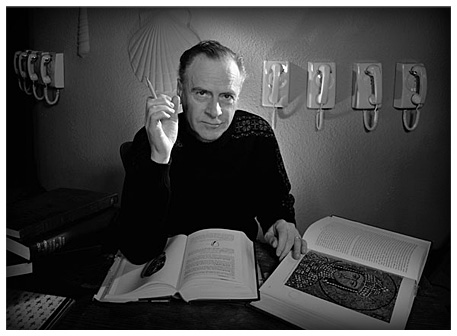
Marshall McLuhan


https://www.marshallmcluhan.com/


McLuhan was still a twenty-year old undergraduate at the University of Manitoba, in western Canada, in the dirty thirties, when he wrote in his diary that he would never become an academic. He was learning in spite of his professors, but he would become a professor of English in spite of himself. After Manitoba, graduate work at Cambridge University planted the seed for McLuhan’s eventual move toward media analysis. Looking back on both his own Cambridge years and the longer history of the institution, he reflected that a principal aim of the faculty could be summarized as the training of perception, a phrase that aptly summarizes his own aim throughout his career.Portrait by Yousuf Karsh. Copyright the Estate of Yousuf Karsh, California.

The shock that McLuhan experienced in his first teaching post propelled him toward media analysis. Though his students at the University of Wisconsin were his juniors by only five to eight years, he felt removed from them by a generation. He suspected that this had to do with ways of learning and set out to investigate it. The investigation led him back to lessons on the training of perception from his Cambridge professors, such as I.A. Richards (The Meaning of Meaning, Practical Criticism), and forward to discoveries from James Joyce, the symbolist poets, Ezra Pound; back to antiquity and the myth of Narcissus, forward to the mythic structure of modern Western culture dominated by electric technology.

Understanding Media, first published in 1964, focuses on the media effects that permeate society and culture, but McLuhan’s starting point is always the individual, because he defines media as technological extensions of the body. As a result, McLuhan often puts his inquiry and his conclusions in terms of the ratio between the physical senses (the extent to which we depend on them relative to each other) and the consequences of modifications to that ratio. This invariably entails a psychological dimension. Thus, the invention of the alphabet and the resulting intensification of the visual sense in the communication process gave sight priority over hearing, but the effect was so powerful that it went beyond communication through language to reshape literate society’s conception and use of space.

Understanding Media brought McLuhan to prominence in the same decade that celebrated flower power. San Francisco, the home of the summer of love, hosted the first McLuhan festival, featuring the man himself. The saying “God is dead” was much in vogue in the counterculture that quickly adopted McLuhan but missed the irony of giving a man of deep faith the status of an icon.

Spectacular sales of Understanding Media, in hardback and then in paperback editions, and the San Francisco symposium brought him a steady stream of invitations for speaking engagements. He addressed countless groups, ranging from the American Marketing Association and the Container Corporation of America to AT&T and IBM. In March 1967, NBC aired “This is Marshall McLuhan” in its Experiment in TV series. He played on his own famous saying, publishing The Medium is the Massage (co-produced with Quentin Fiore and Jerome Agel), even as he was signing contracts for Culture Is Our Business and From Cliché to Archetype (with Canadian poet Wilfred Watson) with publishers in New York. Dozens of universities awarded McLuhan honorary degrees and he secured a Schweitzer Chair in the Humanities at Fordham University.

At the University of Toronto’s Centre for Culture and Technology, where McLuhan was director, a steady stream of visitors arrived from around the world to absorb his lessons on media, or just to see him and be seen with him. Andy Warhol was scheduled to visit but did not show (when McLuhan finally met him some time later, he pronounced him a “rube”); John Lennon and Yoko Ono arrived unannounced. Understanding Media, which was eventually translated into more than twenty languages, overshadowed the only McLuhan book-length publication from the 1960s that took him back squarely to his roots as a professor of English literature, the two-volume Voices of Literature (edited in collaboration with Richard J. Schoeck). By the time the decade ended, he had collaborated with Canadian artist Harley Parker on Through the Vanishing Point: Space in Poetry and Painting and once more with Quentin Fiore and Jerome Agel on War and Peace in the Global Village. This popular paperback, exploding at every page with McLuhan’s observations juxtaposed to a visual chronicle of twentieth century happenings, bore the improbable subtitle, an inventory of some of the current spastic situations that could be eliminated by more feedforward. The book looks and feels light years away from the Cambridge University of the 1930s where McLuhan trained, but that was just where he had picked up the idea of feedforward from his teacher I. A. Richards.

McLuhan wrote with no knowledge of galvanic skin response technology, terminal node controllers, or the Apple Newton. He might not have been able even to imagine what a biomouse is. But he pointed the way to understanding all of these, not in themselves, but in their relation to each other, to older technologies, and above all in relation to ourselves our bodies, our physical senses, our psychic balance. When he published Understanding Media in 1964, he was disturbed about mankind’s shuffling toward the twenty-first century in the shackles of nineteenth century perceptions. He might be no less disturbed today. And he would continue to issue the challenge that confronts the reader at every page of his writings to cast off those shackles.

Monday, May 29, 2017

CHARON


Charon leaned forward and rowed. All things were one with his weariness.

It was not with him a matter of years or of centuries, but of wide floods of time, and an old heaviness and a pain in the arms that had become for him part of the scheme that the gods had made and was of a piece with Eternity.

If the gods had even sent him a contrary wind it would have divided all time in his memory into two equal slabs.

So grey were all things always where he was that if any radiance lingered a moment among the dead, on the face of such a queen perhaps as Cleopatra, his eyes could not have perceived it.

It was strange that the dead nowadays were coming in such numbers. They were coming in thousands where they used to come in fifties. It was neither Charon's duty nor his wont to ponder in his grey soul why these things might be. Charon leaned forward and rowed.

Then no one came for a while. It was not usual for the gods to send no one down from Earth for such a space. But the gods knew best.

Then one man came alone. And the little shade sat shivering on a lonely bench and the great boat pushed off. Only one passenger: the gods knew best. And great and weary Charon rowed on and on beside the little, silent, shivering ghost.

And the sound of the river was like a mighty sigh that Grief in the beginning had sighed among her sisters, and that could not die like the echoes of human sorrow failing on earthly hills, but was as old as time and the pain in Charon's arms.

Then the boat from the slow, grey river loomed up to the coast of Dis and the little, silent shade still shivering stepped ashore, and Charon turned the boat to go wearily back to the world. Then the little shadow spoke, that had been a man.

"I am the last," he said.

No one had ever made Charon smile before, no one before had ever made him weep.


Lord Dunsany

Sunday, May 28, 2017

Medieval Fantasy City Generator

https://watabou.itch.io/medieval-fantasy-city-generator

Thursday, May 25, 2017

Wednesday, May 24, 2017

Sensei's Library

http://senseis.xmp.net/


Tuesday, May 23, 2017

Caedmon Records


In 1952, Barbara Cohen and Marianne Roney, a pair of recent college graduates, wrote a letter to Welsh poet Dylan Thomas that contained an unusual business proposal. They offered Thomas $500 plus royalties for the right to record him reading his poems aloud. He agreed, but showed up with just enough material to fill one side of a record. Cohen and Roney needed more material, so Thomas suggested an all-but-forgotten holiday story he’d written for Harper’s Bazaar called “A Child’s Christmas in Wales.”

The popularity of Thomas’s album would have far-reaching implications. It launched Cohen and Roney’s company, Caedmon Records, and turned “A Child’s Christmas in Wales” into an enduring holiday classic. It also laid the foundation for today’s multimillion-dollar audiobook industry.

Although attempts at creating spoken recordings of books had been made since the invention of the phonograph, limited storage capacity made it difficult to record long works. Mark Twain tried to record his novel The American Claimant on a phonograph in 1891 but gave up after going through four dozen wax cylinders.

The development of long-playing records (LPs) in the 1930s marked a major step forward. It allowed blind readers in the United States and Great Britain to listen to recordings of great literature, a development that Helen Keller called the most valuable tool for the blind since Braille.

Monday, May 22, 2017

Spring RTS Engine

https://springrts.com

Sunday, May 21, 2017

Friday, May 19, 2017

Horizon Magazine Archives

http://www.unz.org/Pub/Horizon


Total Archives: 10 Years, 102 Issues, 1,000 Articles, 8,431pp

January 1, 1940 to December 1, 1949

Thursday, May 18, 2017

Wednesday, May 17, 2017

Tuesday, May 16, 2017

Monday, May 15, 2017

Saturday, May 13, 2017

Radio Alice

http://www.radioalice.org/

Friday, May 12, 2017

Wednesday, May 10, 2017

Tuesday, May 9, 2017

Buddha’s Birthday


Buddha’s Birthday in the hand of Yan Zhenqing 顏真卿 of the Tang dynasty. Source: Stele of the Many Pagodas 多寶塔碑 (the full name of which is: 大唐西京千福寺多寶佛塔感應碑文) from the 3rd of May 2017, Palace Museum Calendar 故宮日曆.

Sunday, May 7, 2017

IPA vowel chart with audio

https://en.wikipedia.org/wiki/IPA_vowel_chart_with_audio

Saturday, May 6, 2017

Friday, May 5, 2017

Thursday, May 4, 2017

The History of Concrete and the Nabataeans


http://nabataea.net/cement.html


Cement mortar and plaster played an important role in Nabataean life. They used this essential technology from their very earliest years in the desert. Without their special knowledge of cement, the Nabataeans would never have conquered the desert, and would never have risen to the status of a civilization.

Other tribes in the deserts of Arabia lived within the limits that nature put on them. They stayed close to sources of water, and ranged their sheep and camels from there. The Nabataeans on the other hand, built water channels and cisterns far out in the desert to collect the scant rainfall and store it for their use.

Without this knowledge of waterproof cement, the Nabataeans would not have become the far ranging merchants of the Middle East, who easily traversed deserts and inhospitable, barren mountains.

How was it that the Nabataeans developed waterproof cement centuries before its use became common in Europe? In this study, we will begin by examining cement in general, and then looking at how cement was developed and used by other civilizations, especially the Romans. The Romans were contemporary to the later part of the Nabataean Empire, and whose historians recorded for us, how the Romans made and used cement. Lastly, we will look at the special properties of Nabataean cement and speculate about how they developed this amazing technology.

Cement in General
Cement and concrete are often thought of as the same thing, however, they are by nature very different. Cement is an ultra-fine gray powder that binds sand and rocks into a mass which is called concrete. Cement is the key ingredient of concrete, but concrete contains other substances like sand and rocks.

Cement has become one of the world's most widely used building materials. Annual global production of concrete hovers around 5 billion cubic yards, a volume approximated by yearly cement production levels of about 1.25 billion tons. Concrete's global appeal is not accidental, for this stone-like material is produced from some of the world's most abundant resources.


It is important to understand the development of cement on a more global basis, in order to see how Nabataean cement relates to the worldwide development of cement technology. Then we can ask the important question, did the Nabataeans learn their technology from others, or did other civilizations learn their technology from the Nabataeans?

Wednesday, May 3, 2017

135 versions of the Gauss Schoolroom Anecdote

http://bit-player.org/wp-content/extras/gaussfiles/gauss-snippets.html

The great mathematicians feel mathematics in a way the rest of us do not. And their genius for mathematics is immediately recognizable. When Gauss was eight years old, he and his classmates were asked by their teacher to find the sum of the integers from 1 to 100. The children began laboriously to calculate on their slates. All of them (except Gauss) began 1+2=3, 3+3=6, 6+4=10.... Gauss noticed that the integers 1, 2, 3,..., 99, 100 can be placed in pairs as follows: (1, 100), (2, 99), (3, 98), ..., (50, 51). There are exactly 50 such pairs and the sum of the integers in each pair is 101. Hence, the desired sum is the same as 50 times 101, which is 5050. Gauss wrote this number on his slate and handed it to the teacher. The whole process took him only seconds.

Monday, May 1, 2017

The General

“Good-morning, good-morning!” the General said

When we met him last week on our way to the line.

Now the soldiers he smiled at are most of 'em dead,

And we're cursing his staff for incompetent swine.

“He's a cheery old card,” grunted Harry to Jack

As they slogged up to Arras with rifle and pack.


But he did for them both by his plan of attack.


BY SIEGFRIED SASSOON